

Плиткаҳои зангзада
Мехоҳед девори нигоҳдории сангии худро созед, аммо намедонед, ки чӣ тавр оғоз кунед? Агар шумо нобаробарӣ дошта бошед ҳавлӣ, девори нигоҳдории санг метавонад ба пешгирии эрозия кӯмак расонад ва ҷои хуберо барои шинондан таъмин кунад. Барои омӯхтани он, ки чӣ тавр худатонро якҷоя кунед, аз аввал то ба охир хонед.
To figure out how much stone you’ll need, multiply your wall’s height times the depth times the length. If your wall is 2 feet high, 1-1/2 feet wide, and 20 feet long, you’ll need roughly 60 cubic feet of stone. Most stoneyards will deliver the stones for a slight charge; have them placed as close to the site of your retaining wall as possible.
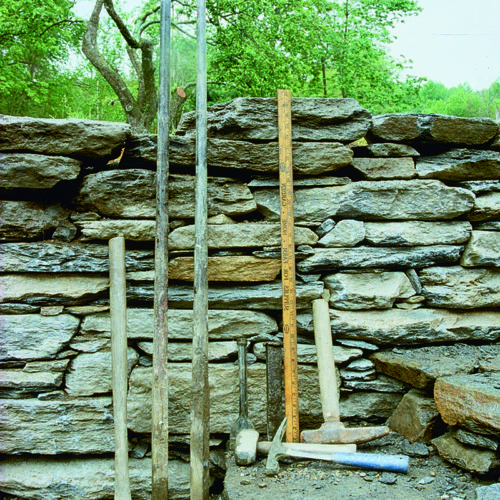
Дар бобати tools, you’ll need a shovel for digging your trench and backfilling, a матток for attacking the grade, and a small sledgehammer for tamping soil. For marking your site and leveling rocks, you’ll need a line level, a few tall stakes, string, some flour, and a 4- or 8-foot level.
Now you can start digging. The easiest approach is to cut and fill—that is, dig into the slope where the wall will go and spread the earth below you to create a level terrace. When you cut and fill, the wall is backed by undisturbed soil, which is more stable than fill. For design reasons, however, you might choose to build a freestanding wall and fill behind it with soil from another site. Or you might do a partial cut and fill, which is somewhere between the two.
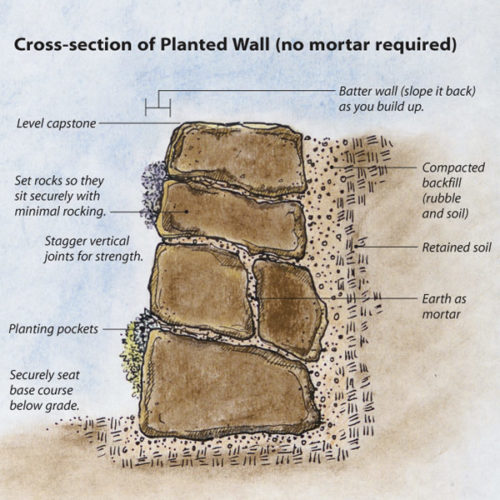
Деворҳо дар курсҳо сохта мешаванд. The base course is structurally the most important, while the final course, the capstone, is the most challenging. For stability, walls should be at least 20 inches wide at the base. They can taper slightly toward the top, but you’ll want a wall that is at least two rocks wide in most places. This can be accomplished by mixing stones of different sizes or by backfilling with a combination of two-thirds rubble to one-third soil.
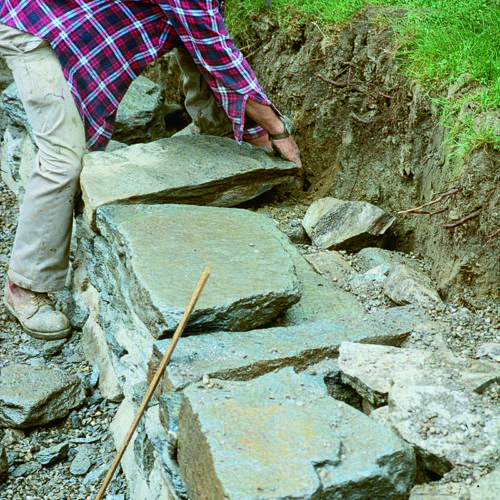
Барои курсии асосй хандак кобед
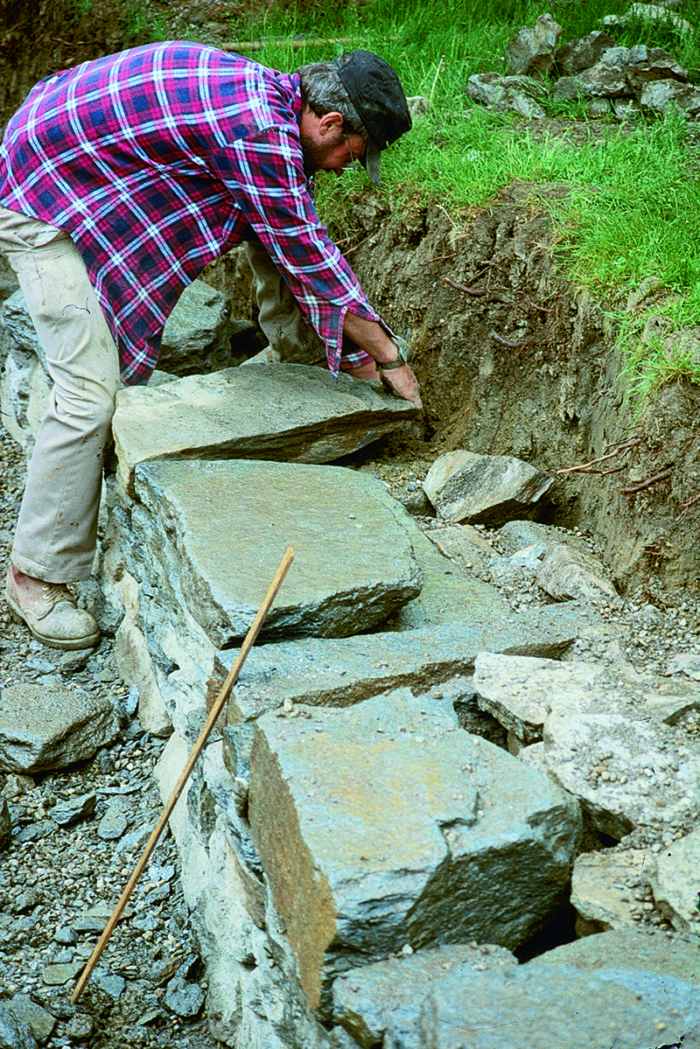
Start by digging a trench about 4 inches deep and at least 2 feet wide. A straightedged spade will give you a nice, even edge. The first course must be very solid and tightly fit because the weight of the wall will rest on it. Take the time to find rocks that lock into place, without leaving gaps. Randomly lay your largest rocks along the front edge of the trench. Set the first stone, shifting it around until it sits securely without being rocked easily, and then fill with the remaining stones. If you are using rectangular stones, you want the height of adjacent stones to be the same, or of a difference that can be made up with a smaller stone. If the rocks are irregular, then the stones will fit together leaving a triangular gap for the next course to fit into. I find irregular rocks easier to work with than flat ones; with flat rocks you have to be more precise. Find a stone that fits well and then continue for a few more feet. A rule of thumb, passed down from my wall-building teacher’s mentor, is to try a stone seven different ways. If it doesn’t fit by the seventh try, use another stone.
Баъдан, хокро аз паси сангҳо кашед ва заминро ба фосилаҳо пахш кунед between, behind, and beneath the stones with top of the sledgehammer. This is an important step because the dirt becomes the mortar for the wall. I also recommend adding rubble (those stones you won’t use on the face of your wall) behind the face course to give greater strength to the wall. Pound the rubble and soil mix until you are satisfied that it is solid. Continue the first course until you reach the end of the wall. When you are done, test
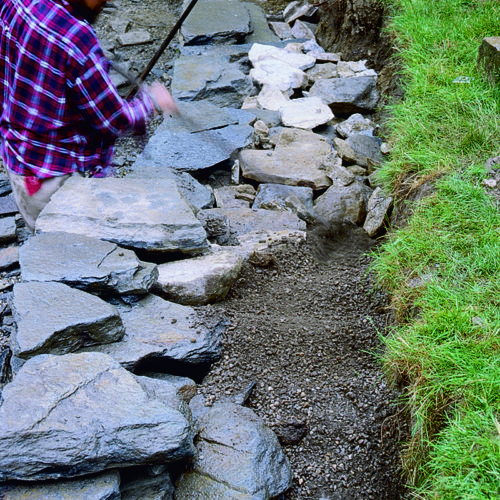
Барои оғози курси дуюм, сангеро интихоб кунед, ки пайванди якуми курси поёнро мебандад. Avoid having joints run up the face of the wall, and angle (batter) the courses backward—approximately 1 inch per vertical foot. This creates a stable wall. For added strength, intermittently place single stones that run the full depth of the wall. This will only work with rectangular rocks. For irregular rocks, place a large rock behind a face rock every 3 feet or so. As you set a course, you will come to situations, probably quite a few of them, where the rock placement is perfect on all sides but one. These are the planting opportunities that give life to a stone wall.
Continue building in this manner until you are one course away from the finished height. Fitting stones will get easier as you go, and you’ll likely discover that there’s a certain magic moment when you’re building a wall: you hear a thump that signals you’ve placed a rock perfec
Баландии ҷойгиршавии девори худро созед
The ideal height for a dry-stacked retaining wall is 18 to 22 inches—so you can sit on it when your gardening chores are done. Even if
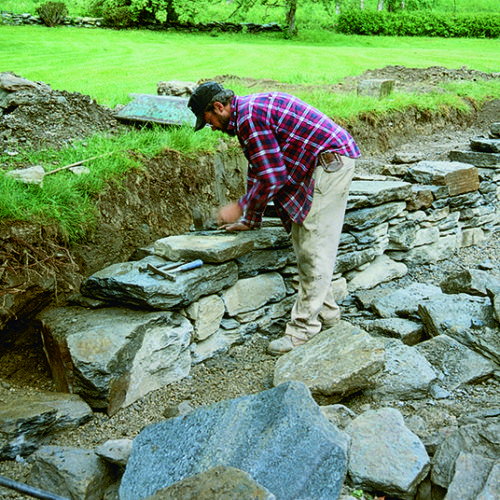
Ба раванди гузоштани санг сабри зиёд биёред; ин авҷи маҳорати шумост, ки шумо то ин лаҳза таҳия кардаед. Он бояд тақрибан 15 то 18 дюйм чуқур бошад, ки аз як то се санг иборат аст. Барои мустаҳкам кардани сангҳо хок ва ҷойгиркунии хубро истифода баред ва ҳамон тавре ки дар пайвандҳои деворӣ, аз буғумҳои дароз дар санг канорагирӣ кунед. Агар шумо хоҳед, ки дар девор нишинед, сангҳои ҳамвор ва ҳамворро интихоб кунед. Ё, холигоҳҳоро бо хок пур кунед ва барои болиштҳо гиёҳҳои хушбӯй шинонед. Санги шинондашуда як ламси зебои анҷом додани девори зинда аст.
 африқоӣ
 албанӣ
 амхарӣ
 арабӣ
арабӣ арманӣ
 озарбойҷонӣ
 баскӣ
баскӣ белорус
 бангалӣ
  боснӣ
боснӣ булгорӣ
 каталонӣ
 Себуано
 Хитой
Хитой Чин (Тайван)
 Корсикӣ
 хорватӣ
 чех
чех Дания
Дания Голландия
 англисӣ
 эсперанто
 эстонӣ
 финландӣ
 фаронсавӣ
 фризӣ
фризӣ галисия
 гурҷӣ
гурҷӣ олмонӣ
 юнонӣ
юнонӣ Гуҷаратӣ
 Креоли Гаити
 хауса
хауса ҳавайӣ
 ибрӣ
ибрӣ Не
Не Миао
Миао Венгрия
 исландӣ
 игбо
игбо Индонезия
 ирландӣ
 Италия
 Ҷопон
Ҷопон ёвонӣ
ёвонӣ каннада
 қазоқӣ
 кхмер
кхмер Руанда
 Корея
Корея курд
курд киргиз
 сил
сил лотинӣ
 латыш
латыш литваӣ
 Люксембург
 македонӣ
 Малгаши
 малайӣ
 малаялам
 малтаӣ
 маори
маори маратҳӣ
 муғулӣ
 Мянмар
 непалӣ
 норвегӣ
 норвегӣ
 Окситан
 пашту
пашту форсӣ
форсӣ полякӣ
 португалӣ
  Панҷобӣ
 руминӣ
 русӣ
русӣ самоа
самоа Гаэли Шотландия
 сербӣ
сербӣ англисӣ
 Шона
Шона Синдӣ
Синдӣ Сингал
 словакӣ
 словенӣ
 Сомали
 испанӣ
 сунданӣ
 суахили
 шведӣ
шведӣ Тагалогӣ
 тоҷикӣ
 тамилӣ
 тоторӣ
 телугу
 тай
тай туркӣ
туркӣ туркман
 украинӣ
 урду
урду уйгур
уйгур узбек
узбек Ветнами
 Уелсӣ
Уелсӣ