

البلاط الصدئ
هل ترغب في بناء جدار حجري خاص بك، لكنك غير متأكد من كيفية البدء؟ إذا كان لديك متفاوتة في الفناء، يمكن أن يساعد الجدار الاستنادي الحجري في منع التآكل ويوفر مكانًا جميلاً للزراعة. لتتعلم كيفية تجميع الأشياء الخاصة بك معًا، من البداية إلى النهاية، تابع القراءة.
To figure out how much stone you’ll need, multiply your wall’s height times the depth times the length. If your wall is 2 feet high, 1-1/2 feet wide, and 20 feet long, you’ll need roughly 60 cubic feet of stone. Most stoneyards will deliver the stones for a slight charge; have them placed as close to the site of your retaining wall as possible.
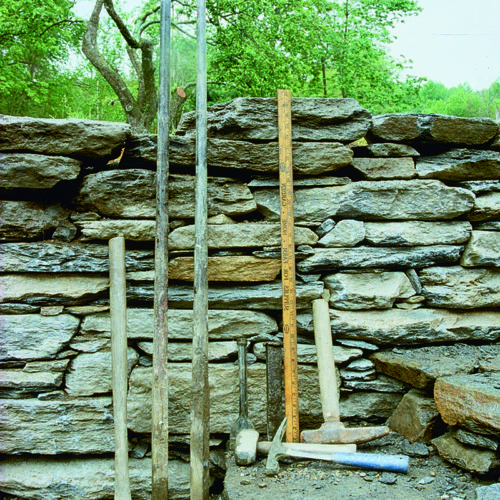
أما بالنسبة لل tools, you’ll need a shovel for digging your trench and backfilling, a معول for attacking the grade, and a small sledgehammer for tamping soil. For marking your site and leveling rocks, you’ll need a line level, a few tall stakes, string, some flour, and a 4- or 8-foot level.
Now you can start digging. The easiest approach is to cut and fill—that is, dig into the slope where the wall will go and spread the earth below you to create a level terrace. When you cut and fill, the wall is backed by undisturbed soil, which is more stable than fill. For design reasons, however, you might choose to build a freestanding wall and fill behind it with soil from another site. Or you might do a partial cut and fill, which is somewhere between the two.
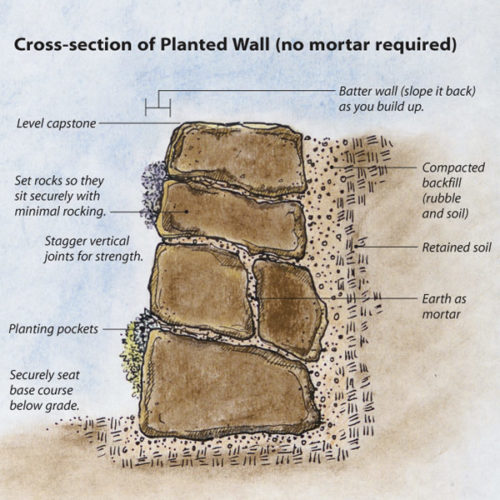
يتم بناء الجدران في الدورات. The base course is structurally the most important, while the final course, the capstone, is the most challenging. For stability, walls should be at least 20 inches wide at the base. They can taper slightly toward the top, but you’ll want a wall that is at least two rocks wide in most places. This can be accomplished by mixing stones of different sizes or by backfilling with a combination of two-thirds rubble to one-third soil.
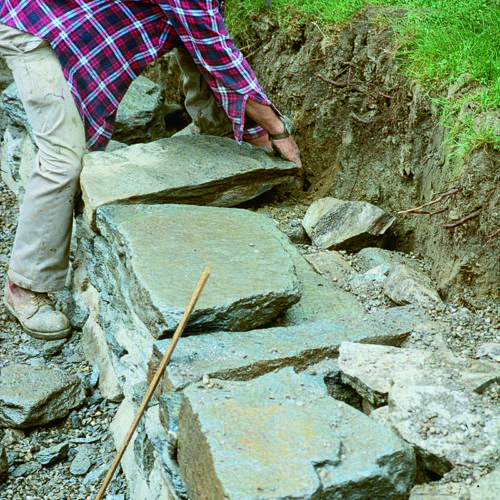
حفر خندق للدورة الأساسية
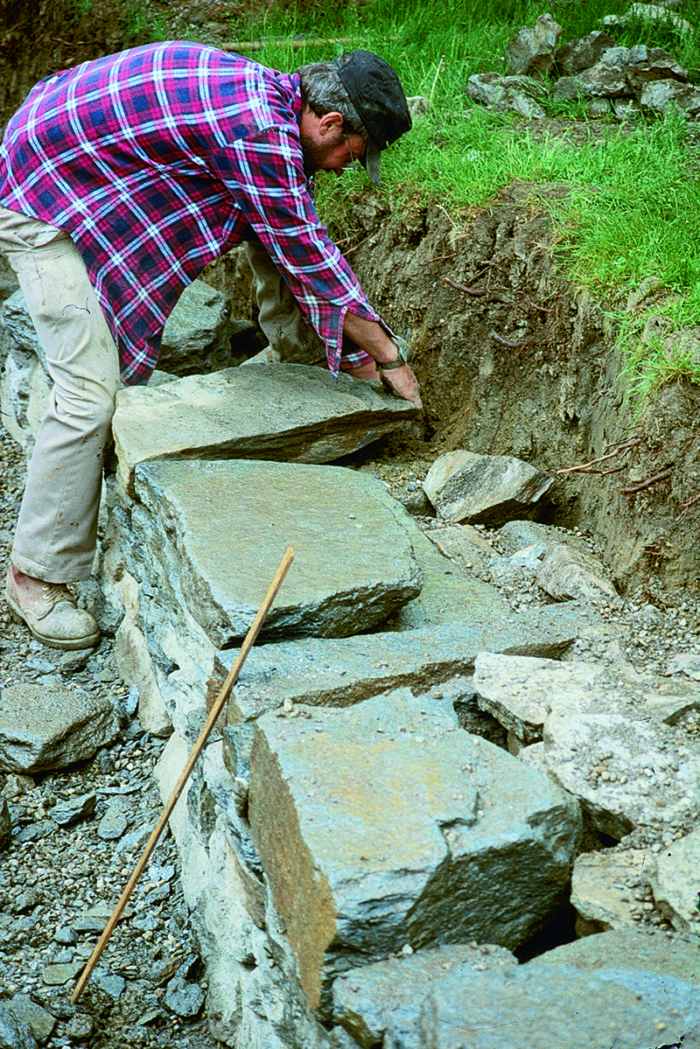
Start by digging a trench about 4 inches deep and at least 2 feet wide. A straightedged spade will give you a nice, even edge. The first course must be very solid and tightly fit because the weight of the wall will rest on it. Take the time to find rocks that lock into place, without leaving gaps. Randomly lay your largest rocks along the front edge of the trench. Set the first stone, shifting it around until it sits securely without being rocked easily, and then fill with the remaining stones. If you are using rectangular stones, you want the height of adjacent stones to be the same, or of a difference that can be made up with a smaller stone. If the rocks are irregular, then the stones will fit together leaving a triangular gap for the next course to fit into. I find irregular rocks easier to work with than flat ones; with flat rocks you have to be more precise. Find a stone that fits well and then continue for a few more feet. A rule of thumb, passed down from my wall-building teacher’s mentor, is to try a stone seven different ways. If it doesn’t fit by the seventh try, use another stone.
بعد ذلك، قم بجرف الأوساخ خلف الحجارة ودك الأرض في الفراغات between, behind, and beneath the stones with top of the sledgehammer. This is an important step because the dirt becomes the mortar for the wall. I also recommend adding rubble (those stones you won’t use on the face of your wall) behind the face course to give greater strength to the wall. Pound the rubble and soil mix until you are satisfied that it is solid. Continue the first course until you reach the end of the wall. When you are done, test
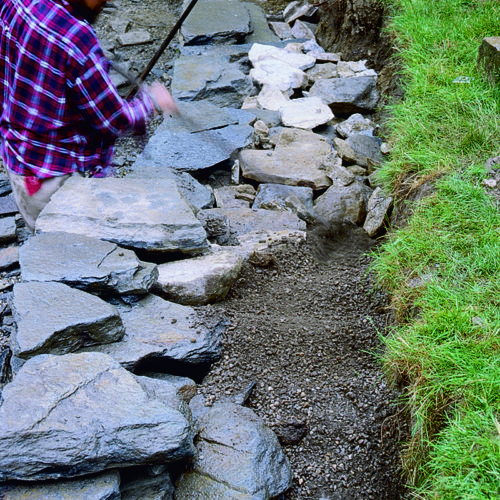
لبدء الدورة الثانية، اختر الحجر الذي سيسد المفصل الأول من الدورة السفلية. Avoid having joints run up the face of the wall, and angle (batter) the courses backward—approximately 1 inch per vertical foot. This creates a stable wall. For added strength, intermittently place single stones that run the full depth of the wall. This will only work with rectangular rocks. For irregular rocks, place a large rock behind a face rock every 3 feet or so. As you set a course, you will come to situations, probably quite a few of them, where the rock placement is perfect on all sides but one. These are the planting opportunities that give life to a stone wall.
Continue building in this manner until you are one course away from the finished height. Fitting stones will get easier as you go, and you’ll likely discover that there’s a certain magic moment when you’re building a wall: you hear a thump that signals you’ve placed a rock perfec
اجعل ارتفاع موقع الحائط الخاص بك
The ideal height for a dry-stacked retaining wall is 18 to 22 inches—so you can sit on it when your gardening chores are done. Even if
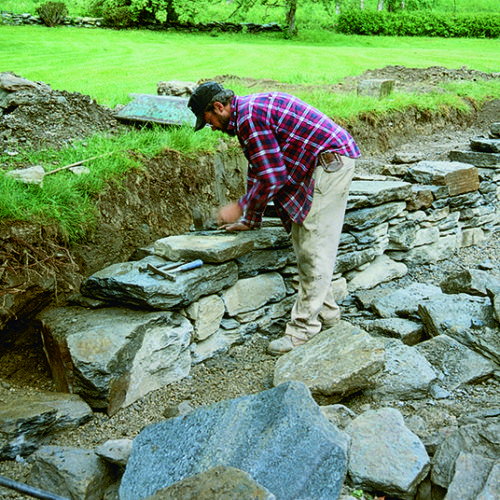
تحلى بالكثير من الصبر في عملية وضع حجر التتويج؛ إنه تتويج للمهارة التي طورتها إلى هذه النقطة. ينبغي أن يكون عمقها حوالي 15 إلى 18 بوصة، وتتكون من حجر إلى ثلاثة أحجار. استخدم التربة والوضع الجيد لتثبيت الحجارة، وكما هو الحال مع فواصل الجدار، تجنب الفواصل الطويلة في حجر القمة. إذا كنت تريد الجلوس على الحائط، فاختر حجارة ناعمة ومسطحة. أو املأ الفجوات بالتربة وازرع الأعشاب العطرية للوسائد. يعتبر حجر القمة المزروع بمثابة لمسة نهائية مبهجة لجدار المعيشة.






 الأفريقي
 الألبانية
 الأمهرية
 عربي
عربي الأرمينية
 أذربيجاني
 الباسك
 البيلاروسية
 البنغالية
  البوسنية
 البلغارية
 الكاتالونية
 السيبيونو
 الصين
الصين الصين (تايوان)
 كورسيكية
 الكرواتية
 التشيكية
 دانماركي
 هولندي
 إنجليزي
 الاسبرانتو
 الإستونية
 الفنلندية
 فرنسي
فرنسي الفريزية
 الجاليكية
 الجورجية
 ألمانية
 اليونانية
 الغوجاراتية
 الكريولية الهايتية
 الهوسا
 هاواي
هاواي اللغة العبرية
 لا
لا مياو
مياو المجرية
 الأيسلندية
 الإيغبو
 الاندونيسية
 الأيرلندية
 ايطالي
 اليابانية
 الجاوية
 الكانادا
 الكازاخستانية
 الخمير
 الرواندية
 الكورية
 كردي
كردي قيرغيزستان
 السل
السل اللاتينية
 لاتفيا
 الليتوانية
 اللوكسمبرجية
 المقدونية
 Malgashi
 لغة الملايو
 المالايالامية
 المالطية
 الماوري
 المهاراتية
 المنغولية
 ميانمار
 النيبالية
 النرويجية
 النرويجية
 الأوكيتانية
 الباشتو
 اللغة الفارسية
 تلميع
تلميع البرتغالية
  البنجابية
 روماني
 الروسية
 ساموا
ساموا الغيلية الاسكتلندية
 الصربية
 إنجليزي
 شونا
شونا السندية
 السنهالية
 السلوفاكية
 السلوفينية
 الصومالية
 الأسبانية
 السودانية
 السواحلية
 السويدية
 التاغالوغية
 الطاجيكية
 التاميل
 التتار
 التيلجو
 التايلاندية
 اللغة التركية
 التركمان
 الأوكرانية
 الأردية
 الأويغور
 الأوزبكية
 الفيتنامية
 تهرب من دفع الرهان