

Rusty tiles
ئۆزىڭىزنىڭ تاشنى ساقلاپ قېلىش تېمىنى ياسىماقچى ، ئەمما قانداق باشلاشنى بىلەلمەيسىز؟ ئەگەر تەڭسىزلىكىڭىز بولسا ھويلى ، تاش ساقلايدىغان تام چىرىشنىڭ ئالدىنى ئالىدۇ ۋە تېرىشقا ياخشى جاي بىلەن تەمىنلەيدۇ. ئۆزىڭىزنى قانداق بىر تەرەپ قىلىشنى ئۆگىنىش ئۈچۈن باشتىن-ئاخىر ئوقۇڭ.
To figure out how much stone you’ll need, multiply your wall’s height times the depth times the length. If your wall is 2 feet high, 1-1/2 feet wide, and 20 feet long, you’ll need roughly 60 cubic feet of stone. Most stoneyards will deliver the stones for a slight charge; have them placed as close to the site of your retaining wall as possible.
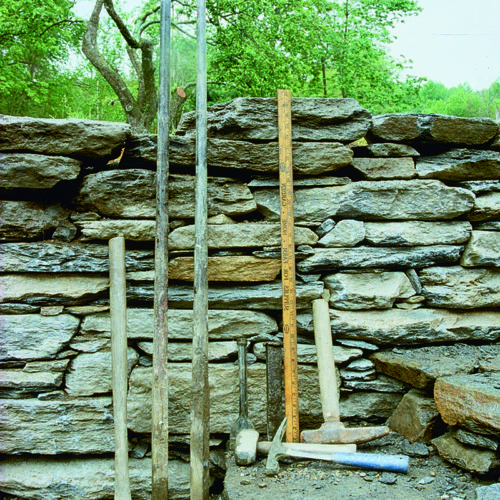
بۇنىڭغا كەلسەك tools, you’ll need a shovel for digging your trench and backfilling, a mattock for attacking the grade, and a small sledgehammer for tamping soil. For marking your site and leveling rocks, you’ll need a line level, a few tall stakes, string, some flour, and a 4- or 8-foot level.
Now you can start digging. The easiest approach is to cut and fill—that is, dig into the slope where the wall will go and spread the earth below you to create a level terrace. When you cut and fill, the wall is backed by undisturbed soil, which is more stable than fill. For design reasons, however, you might choose to build a freestanding wall and fill behind it with soil from another site. Or you might do a partial cut and fill, which is somewhere between the two.
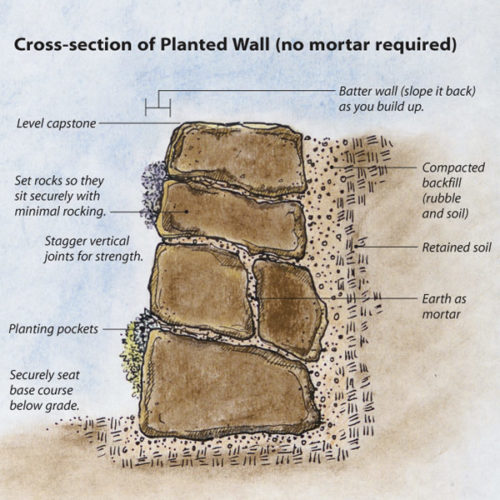
تاملار كۇرسلارغا سېلىنغان. The base course is structurally the most important, while the final course, the capstone, is the most challenging. For stability, walls should be at least 20 inches wide at the base. They can taper slightly toward the top, but you’ll want a wall that is at least two rocks wide in most places. This can be accomplished by mixing stones of different sizes or by backfilling with a combination of two-thirds rubble to one-third soil.
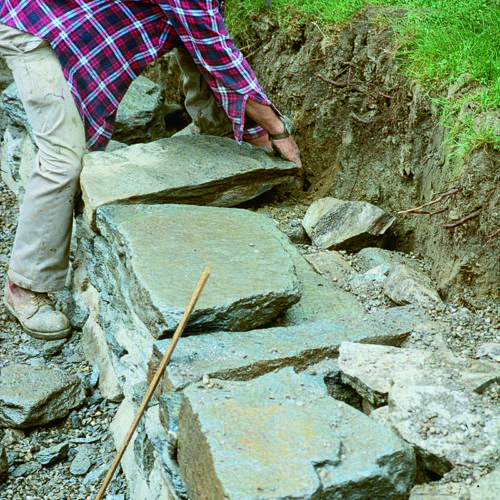
ئاساسىي دەرسلىك ئۈچۈن ئۆستەڭ كولاڭ
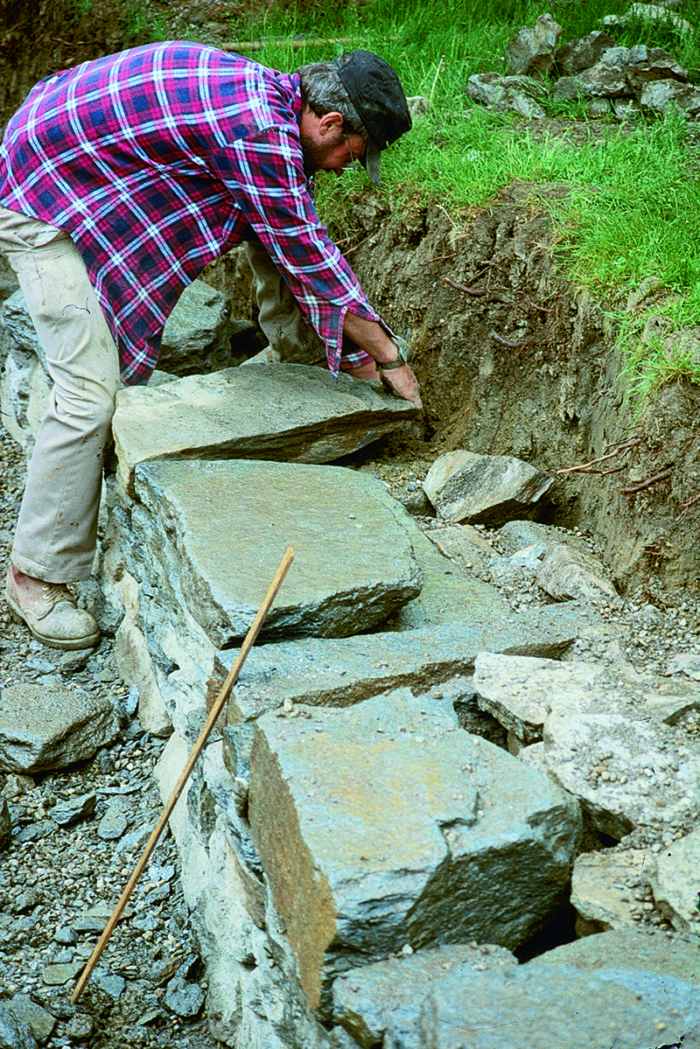
Start by digging a trench about 4 inches deep and at least 2 feet wide. A straightedged spade will give you a nice, even edge. The first course must be very solid and tightly fit because the weight of the wall will rest on it. Take the time to find rocks that lock into place, without leaving gaps. Randomly lay your largest rocks along the front edge of the trench. Set the first stone, shifting it around until it sits securely without being rocked easily, and then fill with the remaining stones. If you are using rectangular stones, you want the height of adjacent stones to be the same, or of a difference that can be made up with a smaller stone. If the rocks are irregular, then the stones will fit together leaving a triangular gap for the next course to fit into. I find irregular rocks easier to work with than flat ones; with flat rocks you have to be more precise. Find a stone that fits well and then continue for a few more feet. A rule of thumb, passed down from my wall-building teacher’s mentor, is to try a stone seven different ways. If it doesn’t fit by the seventh try, use another stone.
ئۇنىڭدىن كېيىن ، تاشنىڭ ئارقىسىدىكى گۈرجەك توپا ۋە يەرنى بوشلۇققا تىزىڭ between, behind, and beneath the stones with top of the sledgehammer. This is an important step because the dirt becomes the mortar for the wall. I also recommend adding rubble (those stones you won’t use on the face of your wall) behind the face course to give greater strength to the wall. Pound the rubble and soil mix until you are satisfied that it is solid. Continue the first course until you reach the end of the wall. When you are done, test
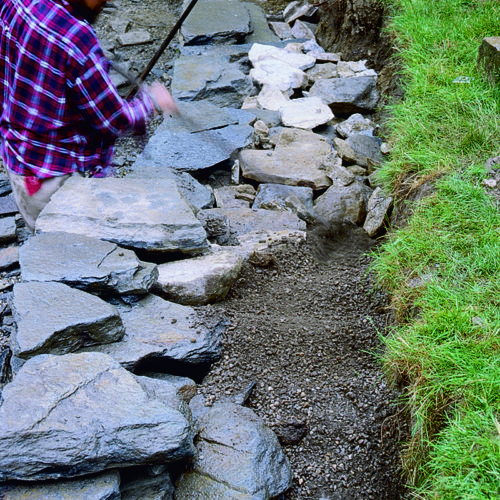
ئىككىنچى دەرسنى باشلاش ئۈچۈن ، تۆۋەنكى دەرسنىڭ بىرىنچى بوغۇمىنى كۆۋرۈك قىلىدىغان تاشنى تاللاڭ. Avoid having joints run up the face of the wall, and angle (batter) the courses backward—approximately 1 inch per vertical foot. This creates a stable wall. For added strength, intermittently place single stones that run the full depth of the wall. This will only work with rectangular rocks. For irregular rocks, place a large rock behind a face rock every 3 feet or so. As you set a course, you will come to situations, probably quite a few of them, where the rock placement is perfect on all sides but one. These are the planting opportunities that give life to a stone wall.
Continue building in this manner until you are one course away from the finished height. Fitting stones will get easier as you go, and you’ll likely discover that there’s a certain magic moment when you’re building a wall: you hear a thump that signals you’ve placed a rock perfec
تامنى ئولتۇرۇش ئېگىزلىكى قىلىڭ
The ideal height for a dry-stacked retaining wall is 18 to 22 inches—so you can sit on it when your gardening chores are done. Even if
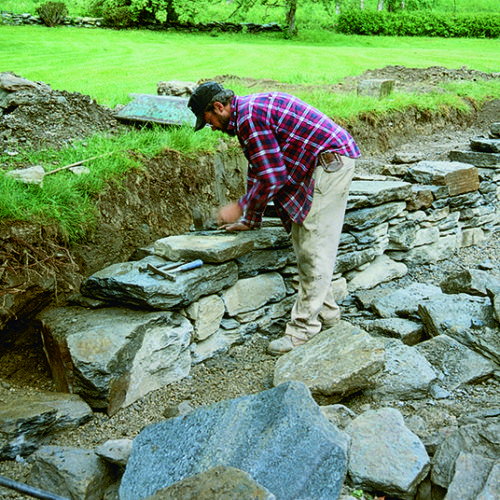
تاشنى سېلىش جەريانىغا نۇرغۇن سەۋرچانلىق ئېلىپ كېلىڭ بۇ سىز ھازىرغىچە تەرەققىي قىلدۇرغان ماھارەتنىڭ خۇلاسىسى. چوڭقۇرلۇقى 15 دىن 18 دىيۇم ئەتراپىدا بولۇشى كېرەك ، بىر ياكى ئۈچ تاشتىن تەركىب تاپقان. تۇپراق ۋە ياخشى ئورۇنلاشتۇرۇش ئارقىلىق تاشنى بىخەتەر قىلىڭ ، تام بوغۇملىرىغا ئوخشاش ، تاش تېشىدىكى ئۇزۇن بوغۇملاردىن ساقلىنىڭ. تامغا ئولتۇرماقچى بولسىڭىز ، سىلىق ، تەكشى تاشلارنى تاللاڭ. ياكى بوشلۇقنى تۇپراق بىلەن تولدۇرۇپ ، خۇشپۇراق ئۆسۈملۈكلەرنى ياستۇققا تىكىڭ. تىكىلگەن تاش تاش ھايات تامغا يېقىشلىق تاماشا.
 African
 ئالبانىيە
 Amharic
 ئەرەبچە
 ئەرمىنىيە
 ئەزەربەيجان
 Basque
 بېلورۇسىيە
 Bengali
  Bosnian
 بۇلغارىيە
 Catalan
 Cebuano
 جۇڭگو
جۇڭگو جۇڭگو (تەيۋەن)
 كورسىكان
 كىرودىيە
 چېخ
چېخ Danish
 گوللاندىيە
 ئىنگىلىزچە
 Esperanto
 ئېستونىيە
 فىنلاندىيە
 فىرانسۇزچە
 Frisian
 Galician
 گرۇزىيە
 German
 گرېتسىيە
 Gujarati
 ھايتى كرېئول
 hausa
hausa hawaiian
 ئىبرانىي تىلى
 ياق
ياق Miao
Miao ۋېنگرىيە
 ئىسلاندىيە
 igbo
igbo ھىندونېزىيە
 irish
irish Italian
 ياپون
ياپون Javanese
 Kannada
 kazakh
 Khmer
Khmer رىۋاندا
 كورېيە
 كۇرد
كۇرد قىرغىزىستان
 TB
TB لاتىنچە
 Latvian
 لىتۋانىيە
 لىيۇكسېمبۇرگ
 ماكېدونىيە
 Malgashi
 مالايسىيا
 Malayalam
 Maltese
 Maori
Maori Marathi
 موڭغۇل
 بېرما
بېرما نېپال
نېپال نورۋېگچە
 نورۋېگچە
 Occitan
 پۇشتۇ
پۇشتۇ پارسچە
 پولشا
پولشا پورتۇگال تىلى
  Punjabi
 Romanian
 رۇسچە
رۇسچە Samoan
 شوتلاندىيە گال تىلى
 سېربىيە
 ئىنگىلىزچە
 Shona
Shona سىندى
سىندى Sinhala
 سلوۋاكىيە
 سىلوۋېنىيە
 سومالى
 ئىسپانچە
 Sundanese
 Swahili
 شىۋىتسىيە
 Tagalog
 تاجىك
تاجىك تامىل
تامىل تاتار
تاتار Telugu
 تايلاند
 تۈرك
تۈرك تۈركمەنلەر
 ئۇكرائىنا
 ئوردۇچە
 ئۇيغۇر
 ئۆزبېك
 ۋېيتنام
 Welsh
Welsh