

Hrdzavé dlaždice
Chcete si postaviť svoj vlastný kamenný oporný múr, no neviete, ako začať? Ak máte nerovnomerné Na dvore môže kamenná oporná stena pomôcť predchádzať erózii a poskytuje pekné miesto na pestovanie. Ak sa chcete dozvedieť, ako si poskladať svoje vlastné, od začiatku do konca, čítajte ďalej.
To figure out how much stone you’ll need, multiply your wall’s height times the depth times the length. If your wall is 2 feet high, 1-1/2 feet wide, and 20 feet long, you’ll need roughly 60 cubic feet of stone. Most stoneyards will deliver the stones for a slight charge; have them placed as close to the site of your retaining wall as possible.
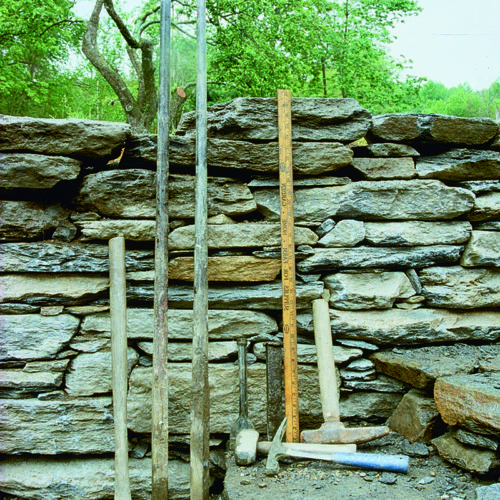
Ako pre tools, you’ll need a shovel for digging your trench and backfilling, a mattock for attacking the grade, and a small sledgehammer for tamping soil. For marking your site and leveling rocks, you’ll need a line level, a few tall stakes, string, some flour, and a 4- or 8-foot level.
Now you can start digging. The easiest approach is to cut and fill—that is, dig into the slope where the wall will go and spread the earth below you to create a level terrace. When you cut and fill, the wall is backed by undisturbed soil, which is more stable than fill. For design reasons, however, you might choose to build a freestanding wall and fill behind it with soil from another site. Or you might do a partial cut and fill, which is somewhere between the two.
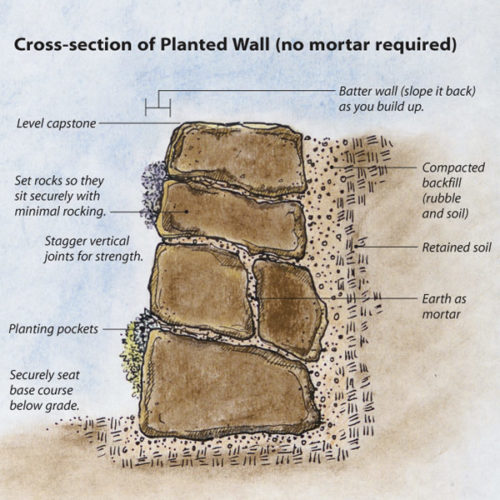
Steny sú postavené v kurzoch. The base course is structurally the most important, while the final course, the capstone, is the most challenging. For stability, walls should be at least 20 inches wide at the base. They can taper slightly toward the top, but you’ll want a wall that is at least two rocks wide in most places. This can be accomplished by mixing stones of different sizes or by backfilling with a combination of two-thirds rubble to one-third soil.
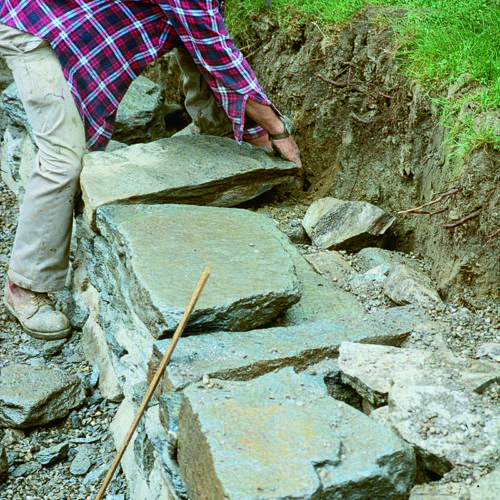
Vykopajte priekopu pre základný kurz
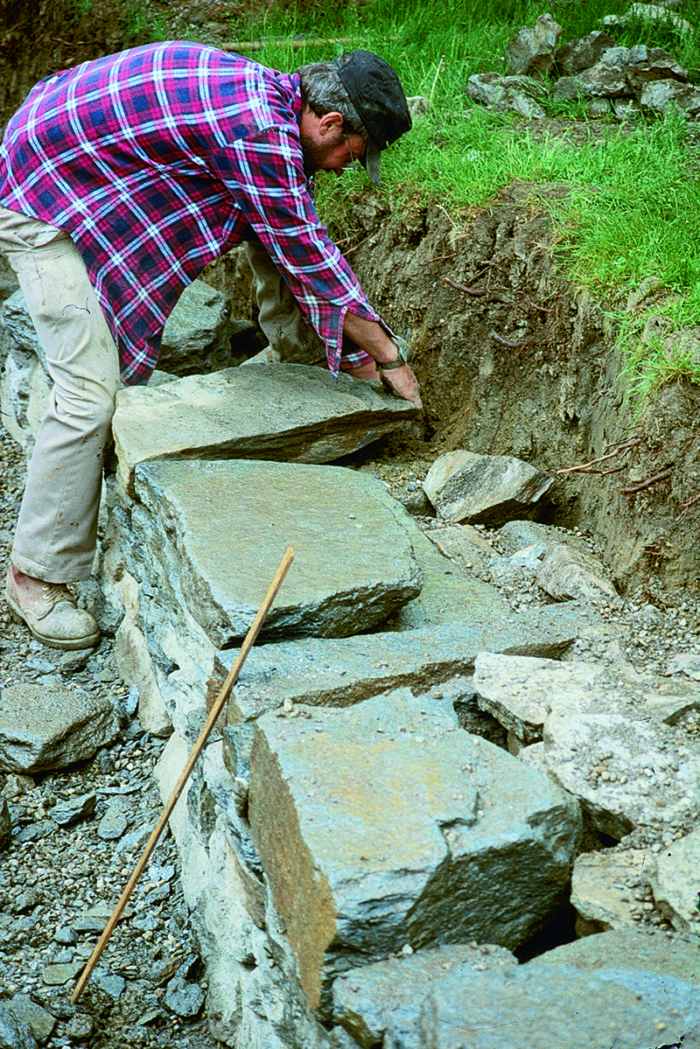
Start by digging a trench about 4 inches deep and at least 2 feet wide. A straightedged spade will give you a nice, even edge. The first course must be very solid and tightly fit because the weight of the wall will rest on it. Take the time to find rocks that lock into place, without leaving gaps. Randomly lay your largest rocks along the front edge of the trench. Set the first stone, shifting it around until it sits securely without being rocked easily, and then fill with the remaining stones. If you are using rectangular stones, you want the height of adjacent stones to be the same, or of a difference that can be made up with a smaller stone. If the rocks are irregular, then the stones will fit together leaving a triangular gap for the next course to fit into. I find irregular rocks easier to work with than flat ones; with flat rocks you have to be more precise. Find a stone that fits well and then continue for a few more feet. A rule of thumb, passed down from my wall-building teacher’s mentor, is to try a stone seven different ways. If it doesn’t fit by the seventh try, use another stone.
Potom lopatou nasypte špinu za kamene a ubite zem do medzier between, behind, and beneath the stones with top of the sledgehammer. This is an important step because the dirt becomes the mortar for the wall. I also recommend adding rubble (those stones you won’t use on the face of your wall) behind the face course to give greater strength to the wall. Pound the rubble and soil mix until you are satisfied that it is solid. Continue the first course until you reach the end of the wall. When you are done, test
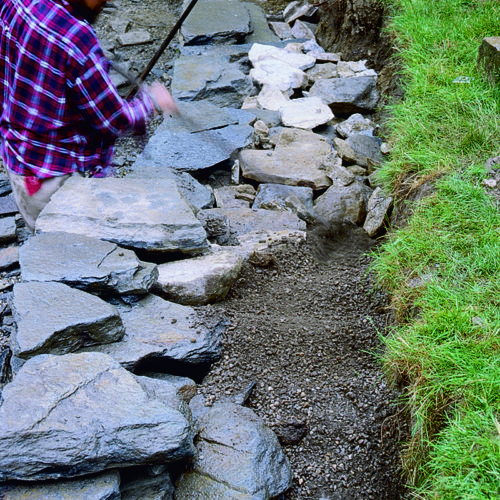
Na začatie druhého chodu si vyberte kameň, ktorý premostí prvý spoj spodného chodu. Avoid having joints run up the face of the wall, and angle (batter) the courses backward—approximately 1 inch per vertical foot. This creates a stable wall. For added strength, intermittently place single stones that run the full depth of the wall. This will only work with rectangular rocks. For irregular rocks, place a large rock behind a face rock every 3 feet or so. As you set a course, you will come to situations, probably quite a few of them, where the rock placement is perfect on all sides but one. These are the planting opportunities that give life to a stone wall.
Continue building in this manner until you are one course away from the finished height. Fitting stones will get easier as you go, and you’ll likely discover that there’s a certain magic moment when you’re building a wall: you hear a thump that signals you’ve placed a rock perfec
Upravte si výšku umiestnenia steny
The ideal height for a dry-stacked retaining wall is 18 to 22 inches—so you can sit on it when your gardening chores are done. Even if
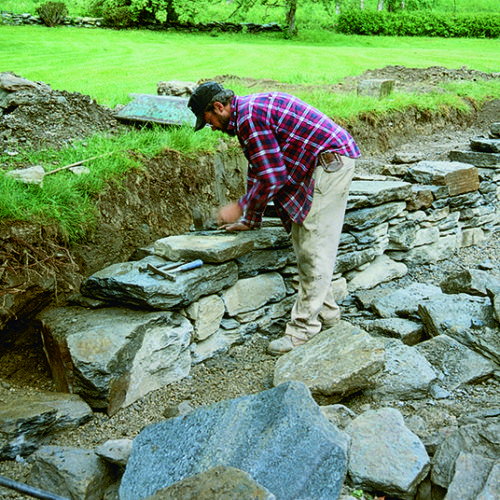
Prineste veľa trpezlivosti do procesu kladenia vrchného kameňa; je to vyvrcholenie zručnosti, ktorú ste doteraz vyvinuli. Mala by byť hlboká asi 15 až 18 palcov, tvorená jedným až tromi kameňmi. Použite pôdu a dobré umiestnenie na upevnenie kameňov a rovnako ako pri spojoch stien sa vyhnite zdĺhavým spojom v základnom kameni. Ak chcete sedieť na stene, vyberte hladké, ploché kamene. Alebo vyplňte medzery zeminou a zasaďte voňavé bylinky na vankúše. Osadený vrchný kameň je nádherným zavŕšením obývacej steny.






 africký
 albánsky
 amharčina
 arabčina
 arménsky
 azerbajdžanský
 baskický
 bieloruský
 bengálsky
  bosniansky
 bulharčina
 katalánsky
 Cebuano
 Čína
Čína Čína (Taiwan)
 korzické
 chorvátsky
 český
český dánčina
 holandský
 Angličtina
 Esperanto
 estónsky
 fínsky
 francúzsky
 frízsky
 Haličský
 gruzínsky
 nemecký
 grécky
 Gudžarátčina
 haitská kreolčina
 hausa
hausa havajský
 hebrejčina
 nie
nie Miao
Miao maďarský
 islandský
 igbo
igbo indonézsky
 írsky
írsky taliansky
 japončina
 jávsky
 Kannada
 kazašský
 khmérsky
 Rwanda
 kórejský
 kurdský
 kirgizský
 TBC
TBC latinčina
 lotyšský
 litovský
 luxemburský
 macedónsky
 Malgashi
 malajčina
 malajálamčina
 maltčina
 Maori
Maori maráthčina
 mongolský
 Mjanmarsko
 nepálsky
 nórsky
 nórsky
 okcitánsky
 paštčina
 perzský
 poľský
 portugalčina
  pandžábsky
 rumunský
 ruský
ruský Samoan
 škótska galčina
 srbský
 Angličtina
 Shona
Shona Sindhi
 sinhálčina
 slovenský
 slovensky
 somálsky
 španielčina
 sundánsky
 svahilčina
 švédsky
 Tagalog
 tadžický
 tamilčina
 tatársky
 telugčina
 thajčina
 turecký
 turkménskym
 Ukrajinčina
 urdčina
 ujgurské
 uzbecký
 Vietnamci
 waleský