

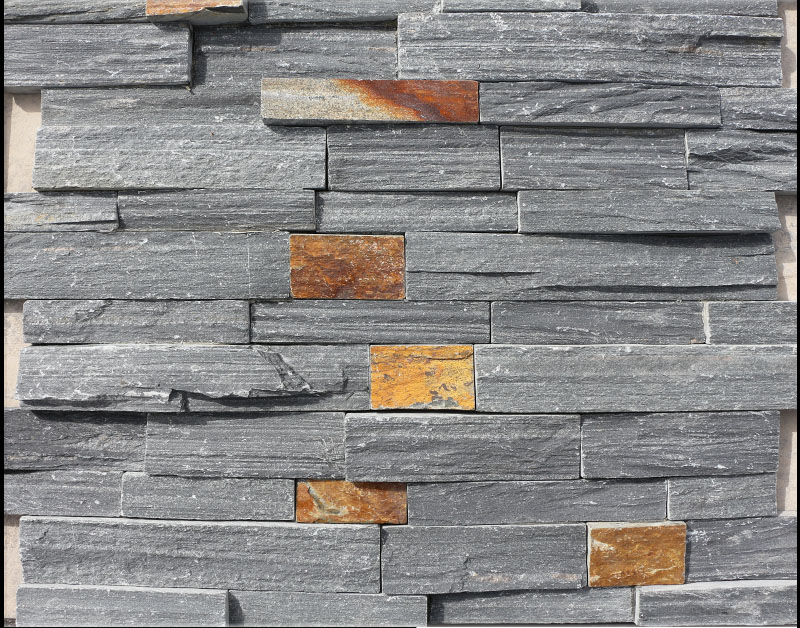
Rostige Fliesen
Möchten Sie Ihre eigene Stützmauer aus Stein bauen, sind sich aber nicht sicher, wie Sie anfangen sollen? Wenn Sie eine unebene Im Garten kann eine Stützmauer aus Stein Erosion vorbeugen und bietet einen schönen Platz zum Pflanzen. Lesen Sie weiter, um zu erfahren, wie Sie Ihre eigene Mauer von Anfang bis Ende bauen.
To figure out how much stone you’ll need, multiply your wall’s height times the depth times the length. If your wall is 2 feet high, 1-1/2 feet wide, and 20 feet long, you’ll need roughly 60 cubic feet of stone. Most stoneyards will deliver the stones for a slight charge; have them placed as close to the site of your retaining wall as possible.
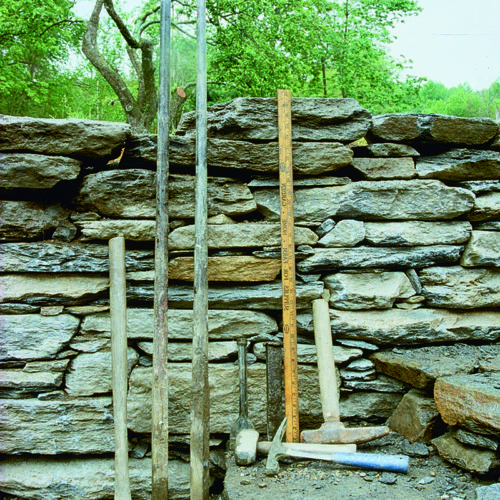
Wie für tools, you’ll need a shovel for digging your trench and backfilling, a Hacke for attacking the grade, and a small sledgehammer for tamping soil. For marking your site and leveling rocks, you’ll need a line level, a few tall stakes, string, some flour, and a 4- or 8-foot level.
Now you can start digging. The easiest approach is to cut and fill—that is, dig into the slope where the wall will go and spread the earth below you to create a level terrace. When you cut and fill, the wall is backed by undisturbed soil, which is more stable than fill. For design reasons, however, you might choose to build a freestanding wall and fill behind it with soil from another site. Or you might do a partial cut and fill, which is somewhere between the two.
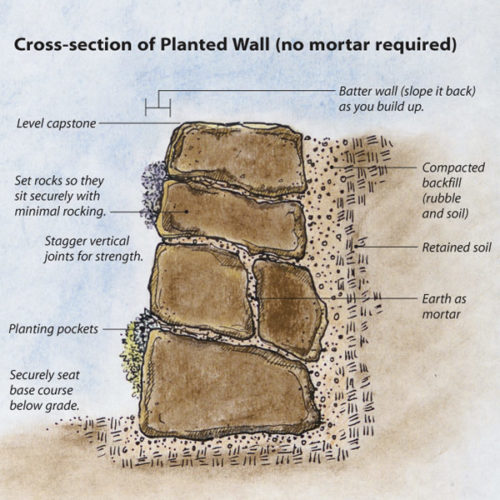
Wände werden in Schichten gebaut. The base course is structurally the most important, while the final course, the capstone, is the most challenging. For stability, walls should be at least 20 inches wide at the base. They can taper slightly toward the top, but you’ll want a wall that is at least two rocks wide in most places. This can be accomplished by mixing stones of different sizes or by backfilling with a combination of two-thirds rubble to one-third soil.
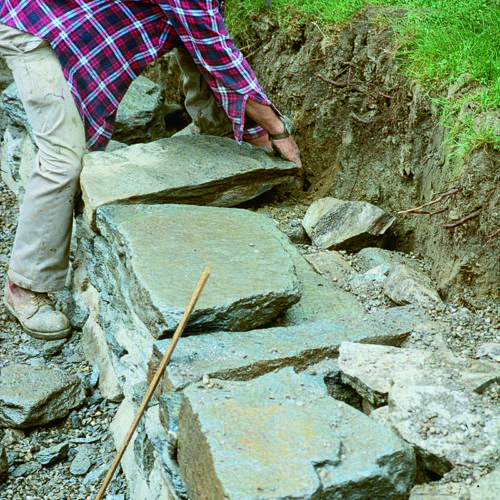
Graben Sie einen Graben für die Tragschicht
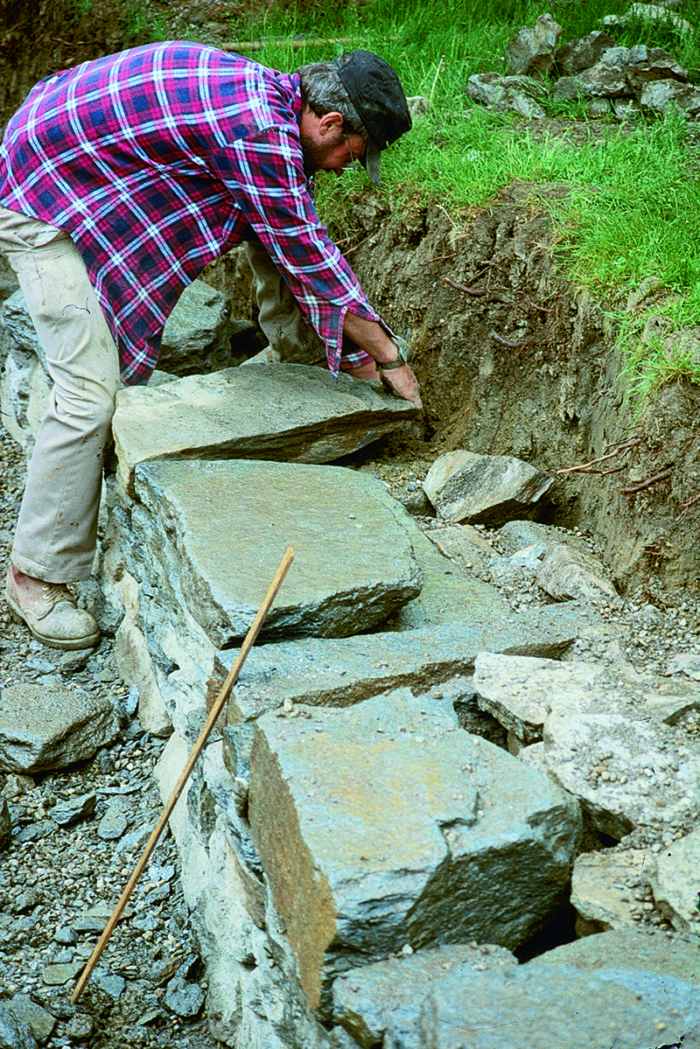
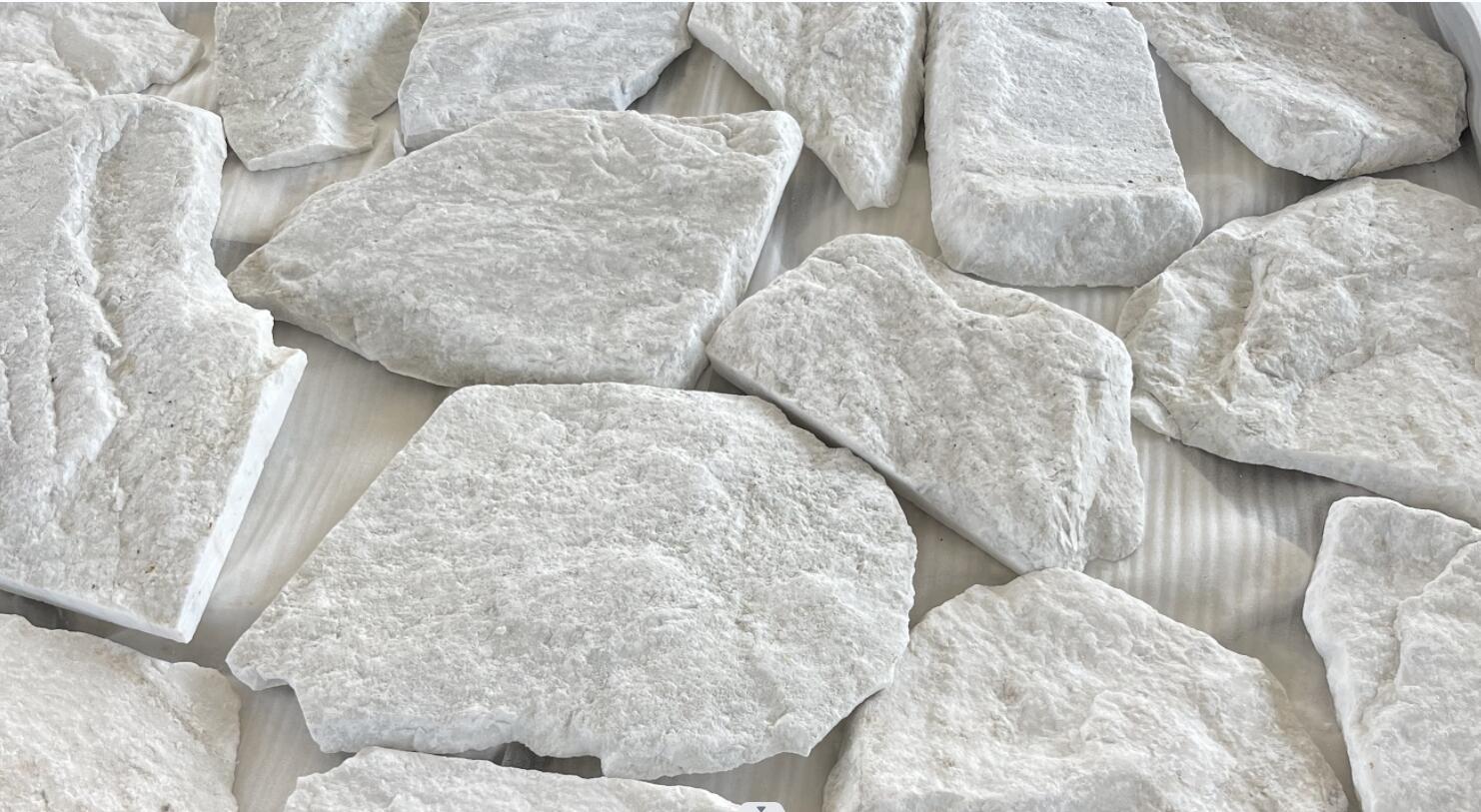
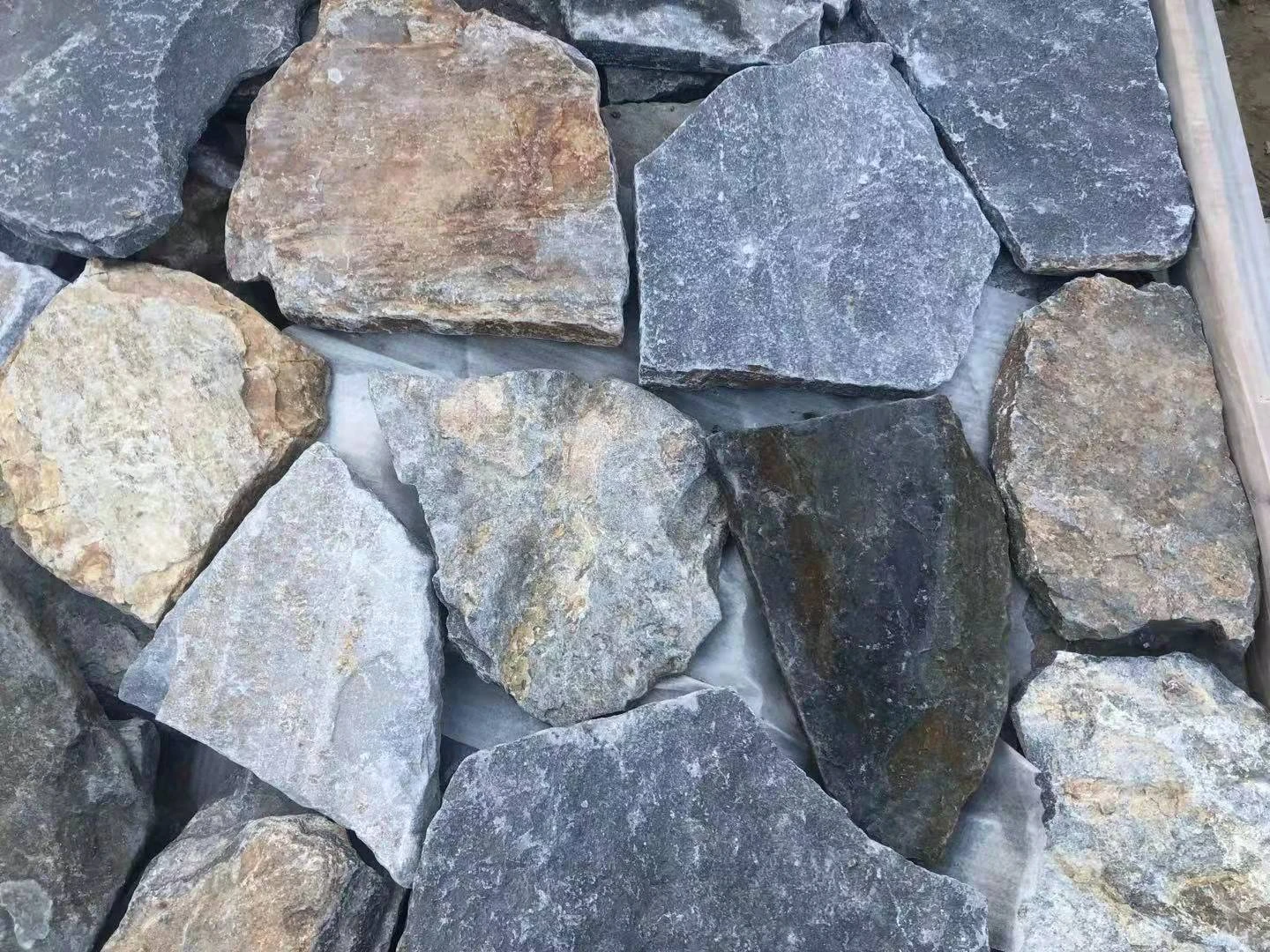
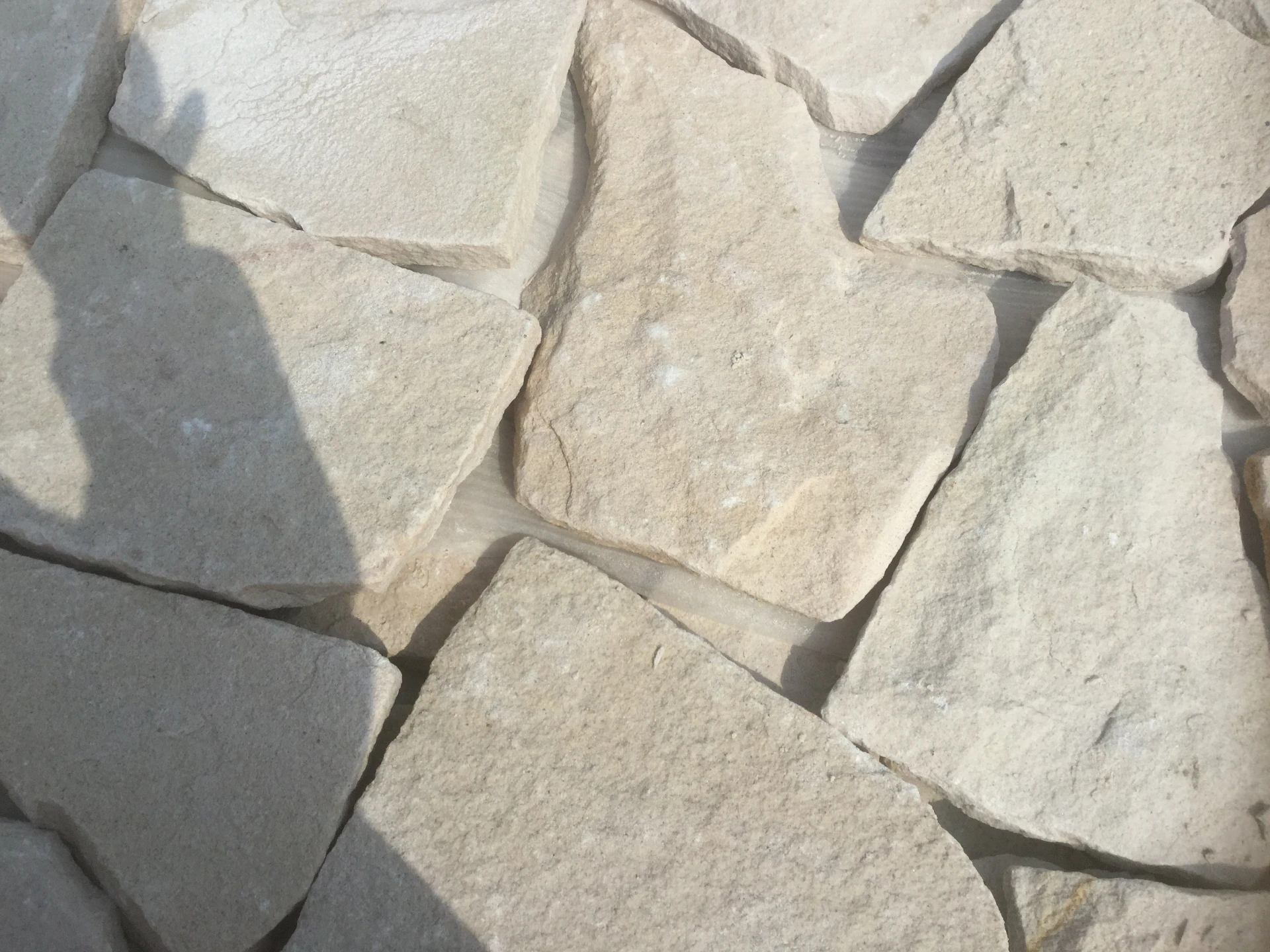
Start by digging a trench about 4 inches deep and at least 2 feet wide. A straightedged spade will give you a nice, even edge. The first course must be very solid and tightly fit because the weight of the wall will rest on it. Take the time to find rocks that lock into place, without leaving gaps. Randomly lay your largest rocks along the front edge of the trench. Set the first stone, shifting it around until it sits securely without being rocked easily, and then fill with the remaining stones. If you are using rectangular stones, you want the height of adjacent stones to be the same, or of a difference that can be made up with a smaller stone. If the rocks are irregular, then the stones will fit together leaving a triangular gap for the next course to fit into. I find irregular rocks easier to work with than flat ones; with flat rocks you have to be more precise. Find a stone that fits well and then continue for a few more feet. A rule of thumb, passed down from my wall-building teacher’s mentor, is to try a stone seven different ways. If it doesn’t fit by the seventh try, use another stone.
Als nächstes schaufeln Sie Erde hinter die Steine und stampfen die Erde in die Zwischenräume between, behind, and beneath the stones with top of the sledgehammer. This is an important step because the dirt becomes the mortar for the wall. I also recommend adding rubble (those stones you won’t use on the face of your wall) behind the face course to give greater strength to the wall. Pound the rubble and soil mix until you are satisfied that it is solid. Continue the first course until you reach the end of the wall. When you are done, test
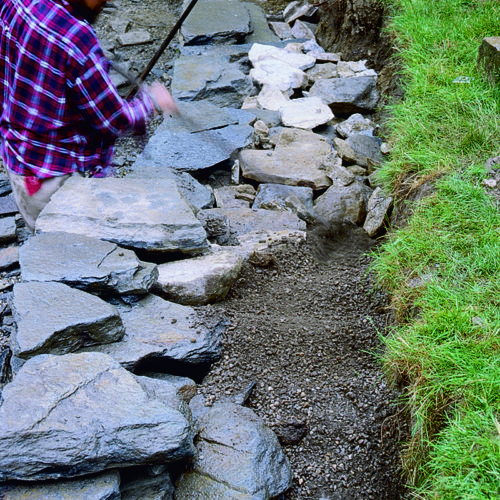
Wählen Sie zum Beginnen der zweiten Reihe einen Stein, der die erste Fuge der unteren Reihe überbrückt. Avoid having joints run up the face of the wall, and angle (batter) the courses backward—approximately 1 inch per vertical foot. This creates a stable wall. For added strength, intermittently place single stones that run the full depth of the wall. This will only work with rectangular rocks. For irregular rocks, place a large rock behind a face rock every 3 feet or so. As you set a course, you will come to situations, probably quite a few of them, where the rock placement is perfect on all sides but one. These are the planting opportunities that give life to a stone wall.
Continue building in this manner until you are one course away from the finished height. Fitting stones will get easier as you go, and you’ll likely discover that there’s a certain magic moment when you’re building a wall: you hear a thump that signals you’ve placed a rock perfec
Machen Sie Ihre Wandmontagehöhe
The ideal height for a dry-stacked retaining wall is 18 to 22 inches—so you can sit on it when your gardening chores are done. Even if
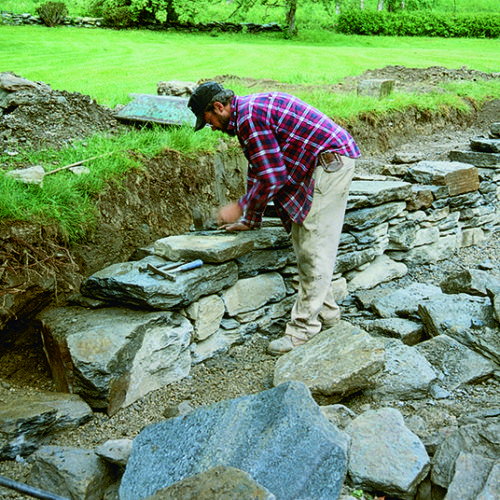
Bringen Sie beim Legen des Schlusssteins viel Geduld mit; Es ist die Krönung der Fähigkeiten, die Sie bis jetzt entwickelt haben. Es sollte etwa 38 bis 45 cm tief sein und aus ein bis drei Steinen bestehen. Verwenden Sie Erde und platzieren Sie die Steine gut, um sie zu befestigen, und vermeiden Sie, genau wie bei Mauerfugen, lange Fugen im Deckstein. Wenn Sie auf der Mauer sitzen möchten, wählen Sie glatte, flache Steine. Oder füllen Sie Lücken mit Erde und pflanzen Sie duftende Kräuter als Kissen. Ein bepflanzter Deckstein ist der reizvolle letzte Schliff für eine lebende Mauer.
 afrikanisch
 albanisch
 Amharisch
 Arabisch
 Armenisch
 Aserbaidschanisch
 baskisch
 Belarussisch
 Bengali
  bosnisch
 bulgarisch
 katalanisch
 Cebuano
 China
China China (Taiwan)
 Korsisch
 kroatisch
 Tschechisch
 dänisch
 Niederländisch
 Englisch
 Esperanto
 estnisch
 finnisch
 Französisch
 Friesisch
 galizisch
 georgisch
 Deutsch
 griechisch
 Gujarati
 Haitianisches Kreol
 Hausa
Hausa hawaiisch
 hebräisch
 Nein
Nein Miao
Miao ungarisch
 isländisch
 igbo
igbo Indonesisch
 irisch
 Italienisch
 japanisch
 Javanisch
 Kannada
 kasachisch
 Khmer
Khmer Ruandisch
 Koreanisch
 kurdisch
 Kirgisisch
 TB
TB Latein
 lettisch
 litauisch
 Luxemburgisch
 mazedonisch
 Malgashi
 malaiisch
 Malayalam
 maltesisch
 Maori
Maori Marathi
 mongolisch
 Myanmar
 Nepali
 norwegisch
 norwegisch
 Okzitanisch
 Paschtu
 persisch
 Polieren
 Portugiesisch
  Punjabi
 rumänisch
 Russisch
 Samoaner
 schottisch Gälisch
 serbisch
 Englisch
 Shona
Shona Sindhi
 Singhalesisch
 slowakisch
 Slowenisch
 somali
 Spanisch
 Sundanesisch
 Suaheli
 Schwedisch
 Tagalog
 Tadschikisch
 Tamilisch
 Tatarisch
 Telugu
 Thailändisch
 Türkisch
 Turkmenisch
 ukrainisch
 Urdu
Urdu Uigur
Uigur Usbekisch
 Vietnamesisch
 Walisisch