

tirên rizyayî
Ma hûn dixwazin dîwarê xweya kevirê xwe ava bikin, lê nizanin ka meriv çawa dest pê dike? Ger we nehevsengek heye hewş, dîwarê ragirtina kevir dikare bibe alîkar ku pêşî li erozyonê bigire û ji bo çandiniyê cîhek xweş peyda dike. Ji bo ku hûn fêr bibin ka meriv çawa xweya xwe berhev dike, ji destpêkê heya dawiyê, bixwînin.
To figure out how much stone you’ll need, multiply your wall’s height times the depth times the length. If your wall is 2 feet high, 1-1/2 feet wide, and 20 feet long, you’ll need roughly 60 cubic feet of stone. Most stoneyards will deliver the stones for a slight charge; have them placed as close to the site of your retaining wall as possible.
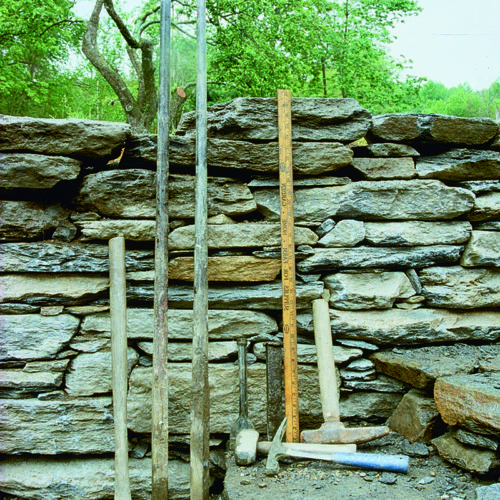
Wek ji bo tools, you’ll need a shovel for digging your trench and backfilling, a mattock for attacking the grade, and a small sledgehammer for tamping soil. For marking your site and leveling rocks, you’ll need a line level, a few tall stakes, string, some flour, and a 4- or 8-foot level.
Now you can start digging. The easiest approach is to cut and fill—that is, dig into the slope where the wall will go and spread the earth below you to create a level terrace. When you cut and fill, the wall is backed by undisturbed soil, which is more stable than fill. For design reasons, however, you might choose to build a freestanding wall and fill behind it with soil from another site. Or you might do a partial cut and fill, which is somewhere between the two.
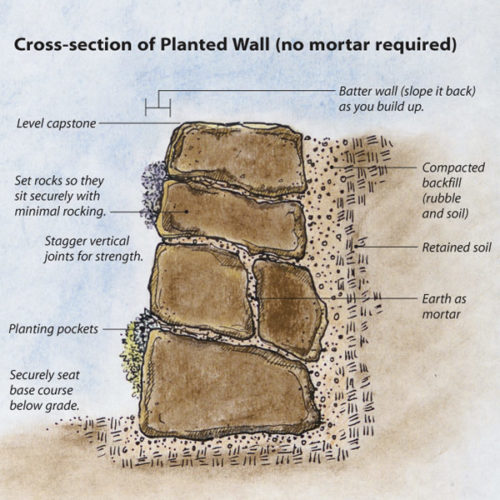
Dîwar di qursan de têne çêkirin. The base course is structurally the most important, while the final course, the capstone, is the most challenging. For stability, walls should be at least 20 inches wide at the base. They can taper slightly toward the top, but you’ll want a wall that is at least two rocks wide in most places. This can be accomplished by mixing stones of different sizes or by backfilling with a combination of two-thirds rubble to one-third soil.
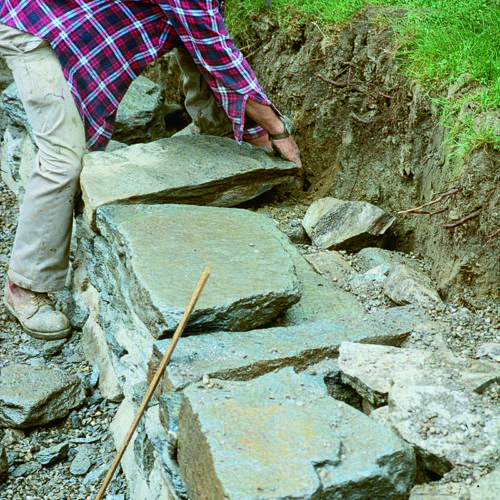
Ji bo qursa bingehîn xendek dikolin
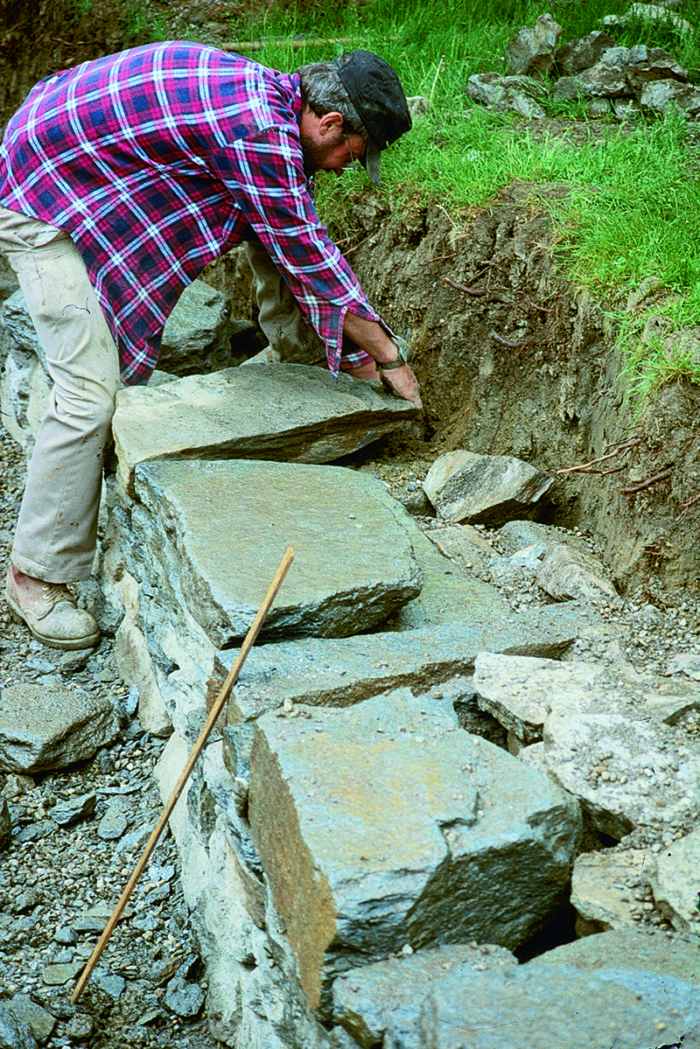
Start by digging a trench about 4 inches deep and at least 2 feet wide. A straightedged spade will give you a nice, even edge. The first course must be very solid and tightly fit because the weight of the wall will rest on it. Take the time to find rocks that lock into place, without leaving gaps. Randomly lay your largest rocks along the front edge of the trench. Set the first stone, shifting it around until it sits securely without being rocked easily, and then fill with the remaining stones. If you are using rectangular stones, you want the height of adjacent stones to be the same, or of a difference that can be made up with a smaller stone. If the rocks are irregular, then the stones will fit together leaving a triangular gap for the next course to fit into. I find irregular rocks easier to work with than flat ones; with flat rocks you have to be more precise. Find a stone that fits well and then continue for a few more feet. A rule of thumb, passed down from my wall-building teacher’s mentor, is to try a stone seven different ways. If it doesn’t fit by the seventh try, use another stone.
Dûv re, axê li pişt keviran biçikînin û erdê bixin nav deveran between, behind, and beneath the stones with top of the sledgehammer. This is an important step because the dirt becomes the mortar for the wall. I also recommend adding rubble (those stones you won’t use on the face of your wall) behind the face course to give greater strength to the wall. Pound the rubble and soil mix until you are satisfied that it is solid. Continue the first course until you reach the end of the wall. When you are done, test
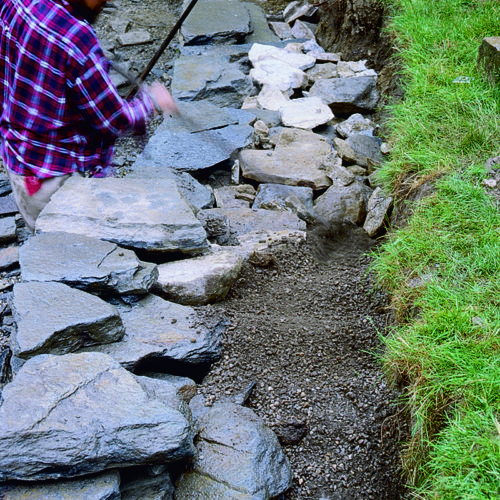
Ji bo destpêkirina qursa duyemîn, kevirek hilbijêrin ku dê hevbenda yekem a qursa jêrîn pira bike. Avoid having joints run up the face of the wall, and angle (batter) the courses backward—approximately 1 inch per vertical foot. This creates a stable wall. For added strength, intermittently place single stones that run the full depth of the wall. This will only work with rectangular rocks. For irregular rocks, place a large rock behind a face rock every 3 feet or so. As you set a course, you will come to situations, probably quite a few of them, where the rock placement is perfect on all sides but one. These are the planting opportunities that give life to a stone wall.
Continue building in this manner until you are one course away from the finished height. Fitting stones will get easier as you go, and you’ll likely discover that there’s a certain magic moment when you’re building a wall: you hear a thump that signals you’ve placed a rock perfec
Bilindahiya cîhê dîwarê xwe bikin
The ideal height for a dry-stacked retaining wall is 18 to 22 inches—so you can sit on it when your gardening chores are done. Even if
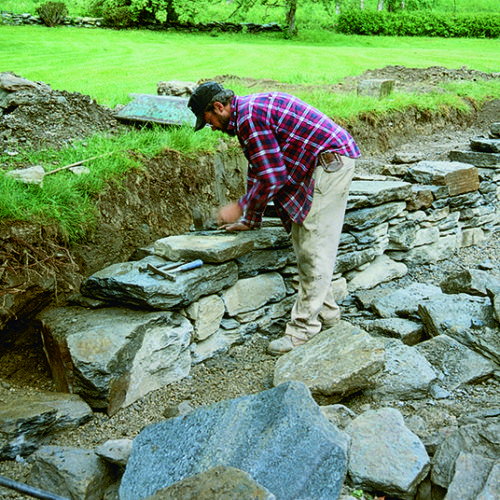
Ji bo pêvajoya danîna kevirê kevirê pir sebrê bînin; ew kulmek jêhatiya ku we heya vê gavê pêşxistiye ye. Divê ew bi qasî 15 û 18 santîmetre kûr be, ji yek û sê keviran pêk tê. Axê û cîhê baş bikar bînin da ku keviran ewle bikin, û mîna girêkên dîwaran, ji girêkên dirêj ên di kapstone de dûr bixin. Heke hûn dixwazin li ser dîwêr rûnin, kevirên nermik û rûn hilbijêrin. An jî, valahiyan bi axê tije bikin û giyayên bîhnxweş ên ji bo kulîlkan biçînin. Kevirek hatî çandin ji bo dîwarek zindî destekek qedandî ya xweş e.
 efrîkanî
 Albanî
 Amharîkî
 Erebî
Erebî Ermenî
 Azerî
Azerî Baskî
Baskî Belarûsî
 Bengalî
  Bosnayî
 Bûlgarî
 Katalanî
 Cebuano
 çîn
çîn Çîn (Taywan)
 Korsîkayî
 Xirwatî
 Çekî
Çekî Danîmarkî
 Holandî
 Îngilîzî
 Esperanto
 Estonî
 Fînlandî
 Fransî
 frîzî
frîzî Galîsyayî
 Gurcî
Gurcî Almanî
 Yewnanî
 Gujaratî
 Kreoliya Haîtiyî
 Hausa
Hausa Hawaiyî
 Îbranî
 Nexêr
Nexêr Miao
Miao Macarî
 Îzlandî
 igbo
igbo Îndonezî
 Irlandî
 Îtalî
Îtalî Japonî
 Javanesî
 Kanadayî
 Qazakî
 Khmer
Khmer Rwandan
 Koreyî
 Kurdî
Kurdî Qirgizî
 TB
TB Latînî
 Letonî
 Lîtvanyayî
 Luksembûrgî
 Makedonî
 Malgashi
 Malayî
 Malayalamî
 Maltezî
 Maorîyî
 Maratî
 Moxolî
 Mîyanmar
 Nepalî
 Norwêcî
 Norwêcî
 Occitan
 Peştûyî
 Farsî
Farsî Polandî
 Portekizî
  Pencabî
 Romanyayî
 Rûsî
Rûsî Samoan
 Scottish Gaelic
 Sirbî
Sirbî Îngilîzî
 Shona
Shona Sindî
Sindî Sinhala
 Slovakî
 Slovenî
 Somalîkî
 Îspanyolî
 Sundanese
 Swahîlîyî
 Swêdî
Swêdî Tagalogî
 Tajik
Tajik Tamîlî
 Tatar
Tatar Teluguyî
 Thayîkî
 Tirkî
Tirkî Tirkmenî
 Ûkraynî
 Ûrdûyî
 Uyghur
 Ozbekî
 Vîetnamî
 Galerkî