

Amabati
Urashaka kubaka ibuye ryawe rigumana urukuta, ariko utazi uburyo bwo gutangira? Niba ufite kimwe imbuga, urukuta rugumana urukuta rushobora gufasha kwirinda isuri kandi rutanga ahantu heza ho gutera. Kugira ngo wige gushyira hamwe ibyawe, kuva utangiye kugeza urangije, soma.
To figure out how much stone you’ll need, multiply your wall’s height times the depth times the length. If your wall is 2 feet high, 1-1/2 feet wide, and 20 feet long, you’ll need roughly 60 cubic feet of stone. Most stoneyards will deliver the stones for a slight charge; have them placed as close to the site of your retaining wall as possible.
Naho tools, you’ll need a shovel for digging your trench and backfilling, a mattock for attacking the grade, and a small sledgehammer for tamping soil. For marking your site and leveling rocks, you’ll need a line level, a few tall stakes, string, some flour, and a 4- or 8-foot level.
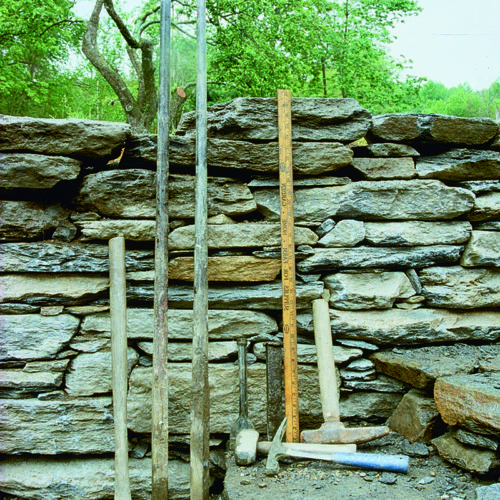
Now you can start digging. The easiest approach is to cut and fill—that is, dig into the slope where the wall will go and spread the earth below you to create a level terrace. When you cut and fill, the wall is backed by undisturbed soil, which is more stable than fill. For design reasons, however, you might choose to build a freestanding wall and fill behind it with soil from another site. Or you might do a partial cut and fill, which is somewhere between the two.
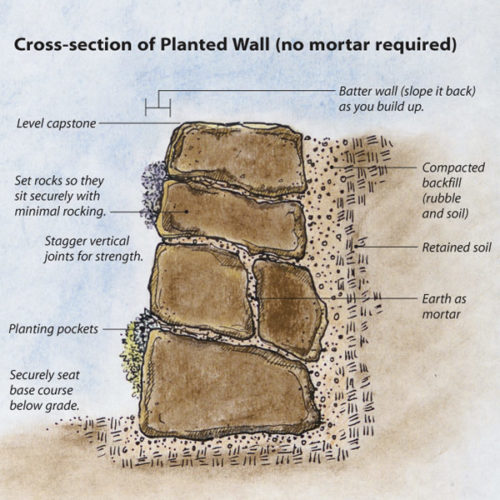
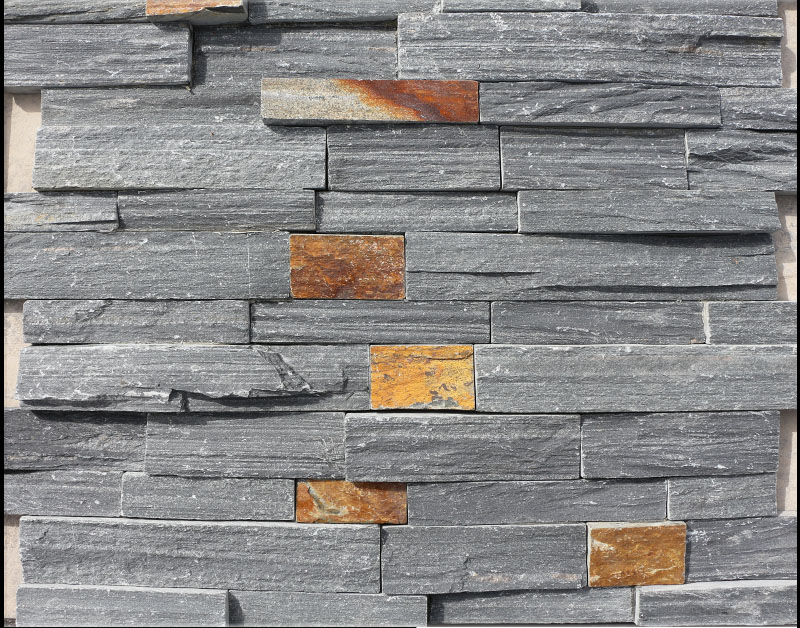
Urukuta rwubatswe mumasomo. The base course is structurally the most important, while the final course, the capstone, is the most challenging. For stability, walls should be at least 20 inches wide at the base. They can taper slightly toward the top, but you’ll want a wall that is at least two rocks wide in most places. This can be accomplished by mixing stones of different sizes or by backfilling with a combination of two-thirds rubble to one-third soil.
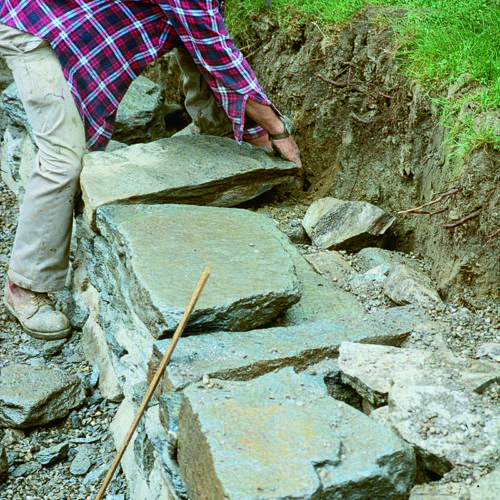
Gucukura umwobo w'amasomo y'ibanze
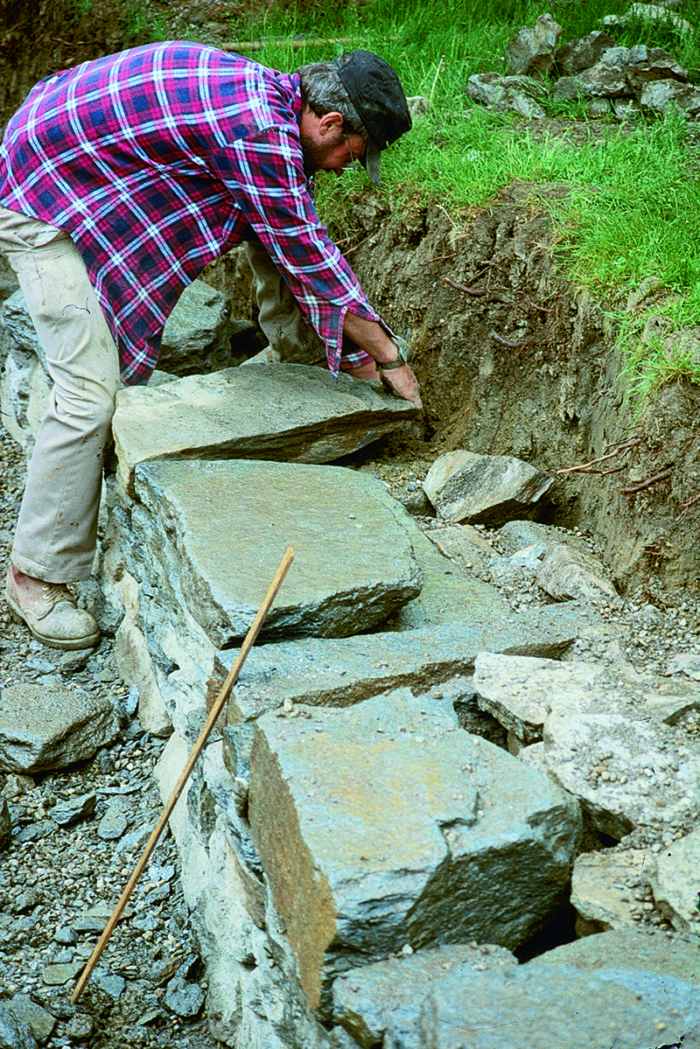
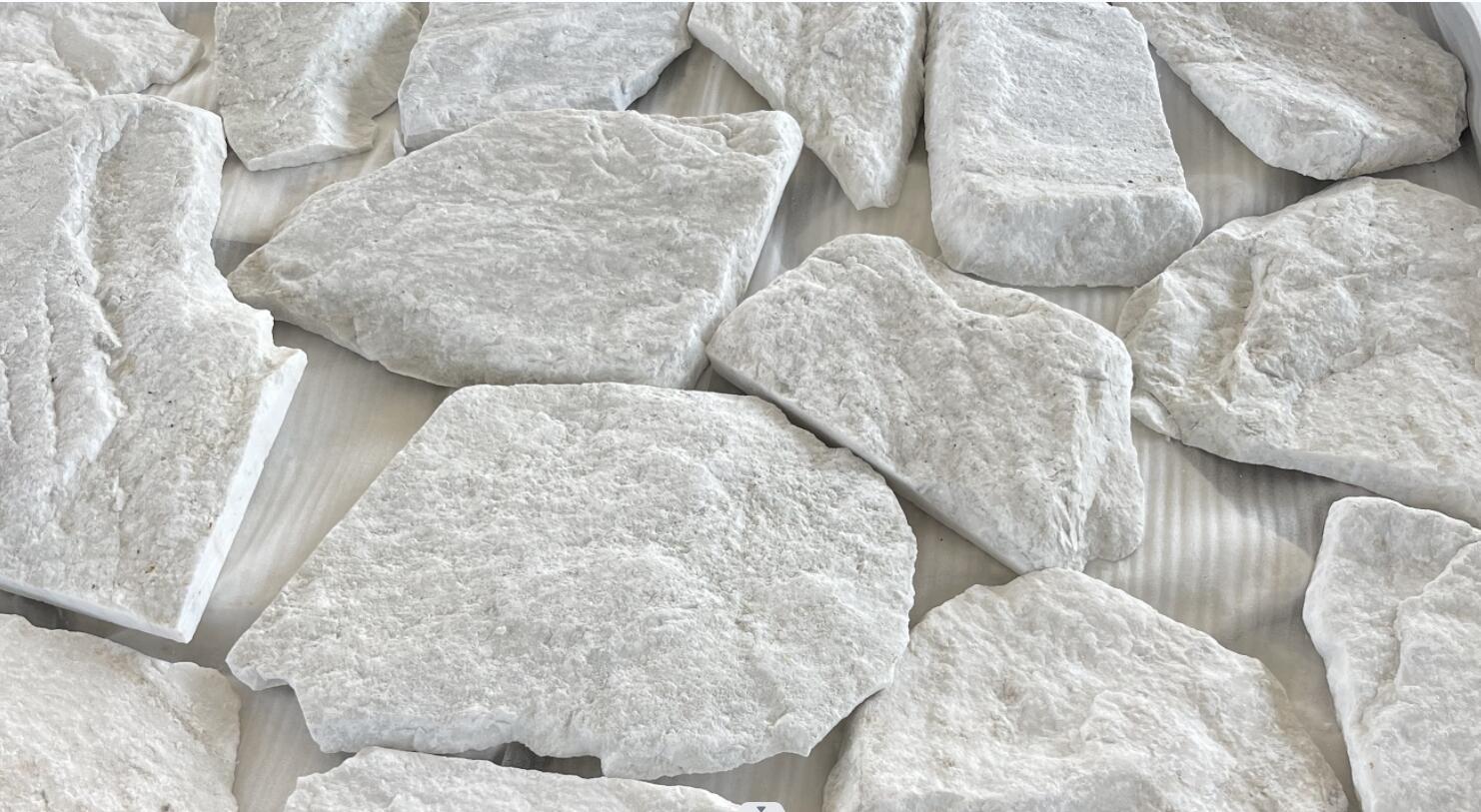
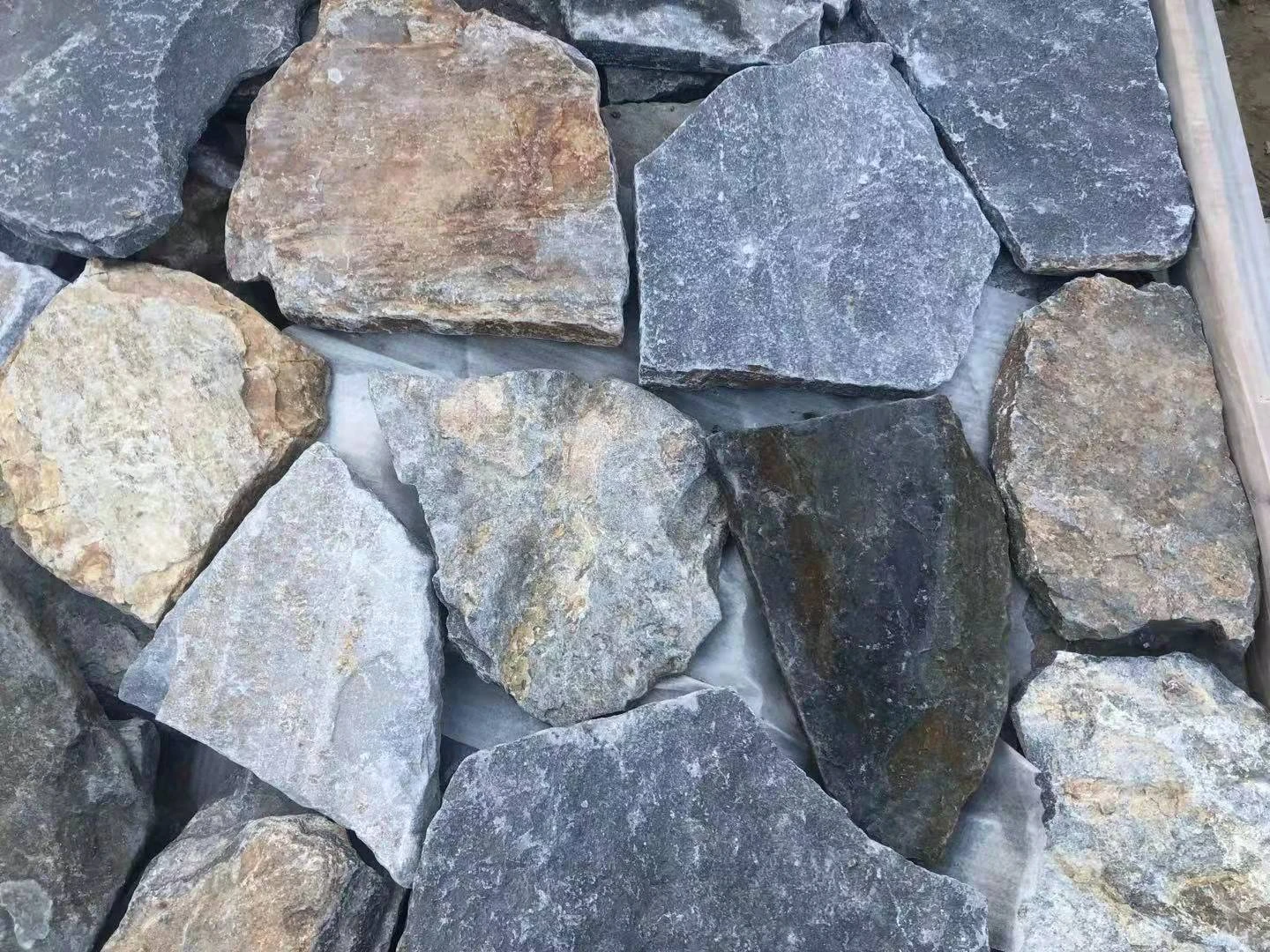
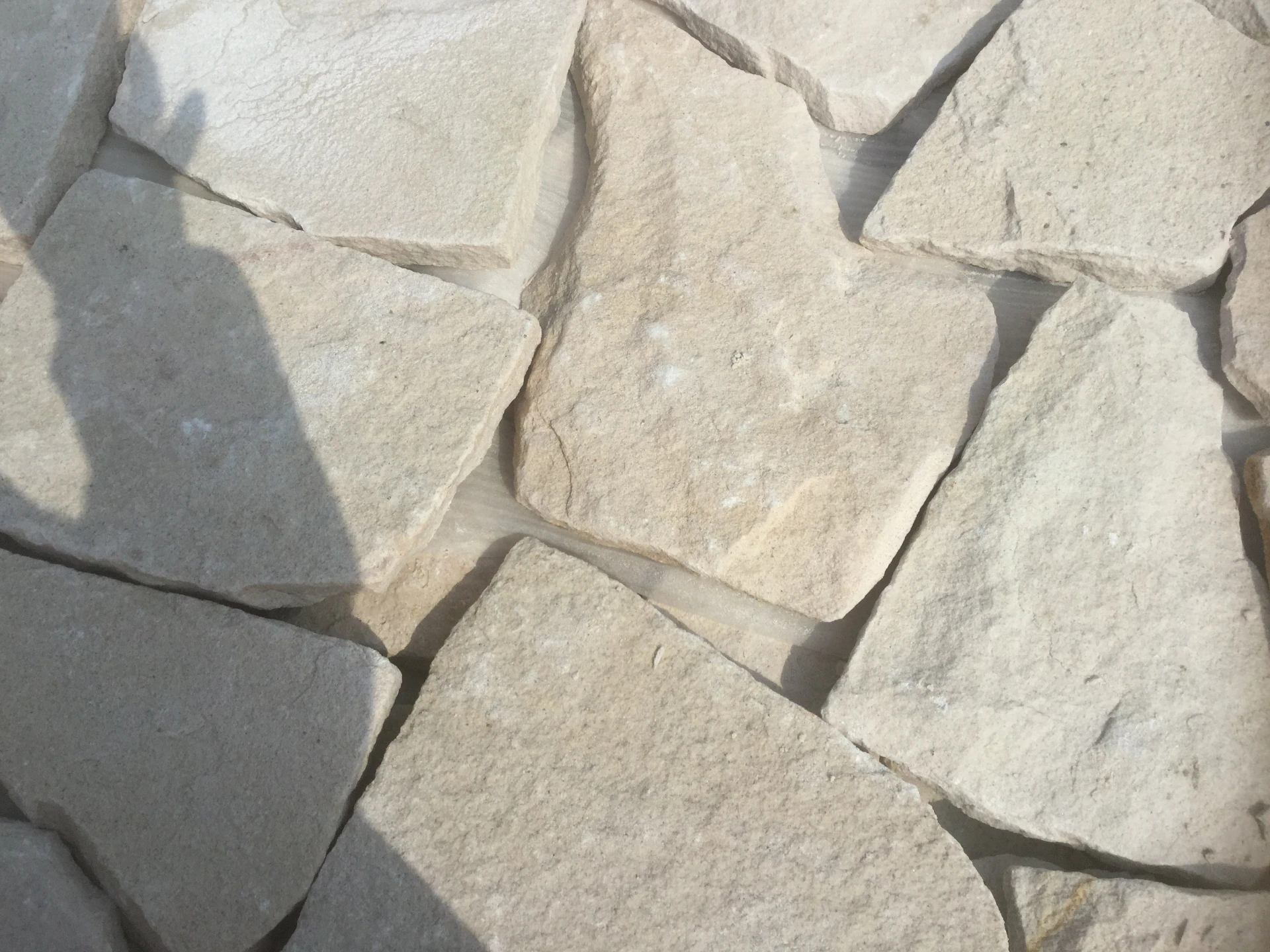
Start by digging a trench about 4 inches deep and at least 2 feet wide. A straightedged spade will give you a nice, even edge. The first course must be very solid and tightly fit because the weight of the wall will rest on it. Take the time to find rocks that lock into place, without leaving gaps. Randomly lay your largest rocks along the front edge of the trench. Set the first stone, shifting it around until it sits securely without being rocked easily, and then fill with the remaining stones. If you are using rectangular stones, you want the height of adjacent stones to be the same, or of a difference that can be made up with a smaller stone. If the rocks are irregular, then the stones will fit together leaving a triangular gap for the next course to fit into. I find irregular rocks easier to work with than flat ones; with flat rocks you have to be more precise. Find a stone that fits well and then continue for a few more feet. A rule of thumb, passed down from my wall-building teacher’s mentor, is to try a stone seven different ways. If it doesn’t fit by the seventh try, use another stone.
Ubukurikira, umwanda wamasuka inyuma yamabuye hanyuma uhindure isi mumwanya between, behind, and beneath the stones with top of the sledgehammer. This is an important step because the dirt becomes the mortar for the wall. I also recommend adding rubble (those stones you won’t use on the face of your wall) behind the face course to give greater strength to the wall. Pound the rubble and soil mix until you are satisfied that it is solid. Continue the first course until you reach the end of the wall. When you are done, test
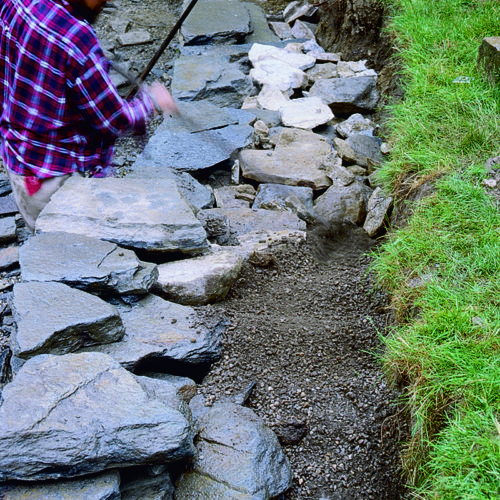
Gutangira amasomo ya kabiri, hitamo ibuye rizahuza igice cya mbere cyamasomo yo hasi. Avoid having joints run up the face of the wall, and angle (batter) the courses backward—approximately 1 inch per vertical foot. This creates a stable wall. For added strength, intermittently place single stones that run the full depth of the wall. This will only work with rectangular rocks. For irregular rocks, place a large rock behind a face rock every 3 feet or so. As you set a course, you will come to situations, probably quite a few of them, where the rock placement is perfect on all sides but one. These are the planting opportunities that give life to a stone wall.
Continue building in this manner until you are one course away from the finished height. Fitting stones will get easier as you go, and you’ll likely discover that there’s a certain magic moment when you’re building a wall: you hear a thump that signals you’ve placed a rock perfec
Kora urukuta rwawe rwicaye
The ideal height for a dry-stacked retaining wall is 18 to 22 inches—so you can sit on it when your gardening chores are done. Even if
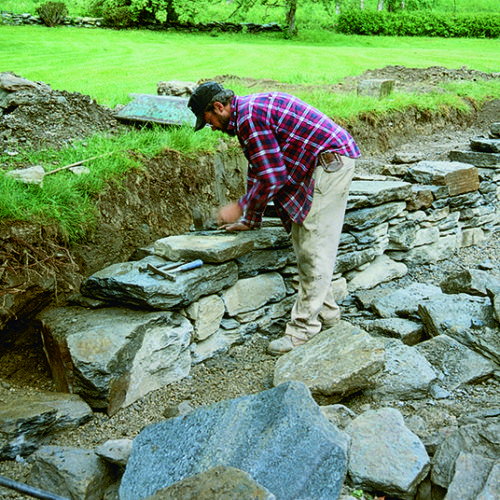
Zana kwihangana kwinshi murwego rwo gushiraho ibuye; ni indunduro yubuhanga wateje imbere kugeza ubu. Igomba kuba ifite santimetero 15 kugeza kuri 18, igizwe n'amabuye imwe kugeza kuri atatu. Koresha igitaka hamwe n’ahantu heza kugirango urinde amabuye, kandi nkuko hamwe nu rukuta, irinde ingingo ndende muri capstone. Niba ushaka kwicara kurukuta, hitamo amabuye yoroshye. Cyangwa, uzuza icyuho cyubutaka hanyuma utere ibyatsi bihumura neza. Ibuye ryatewe ni ikintu cyiza cyo kurangiza kurukuta ruzima.
 Umunyafurika
 Ikinyalubaniya
 Amharic
 Icyarabu
 Ikinyarumeniya
 Azaribayijan
 Basque
 Biyelorusiya
 Ikibengali
  Bosiniya
 Buligariya
 Igikatalani
 Cebuano
 Ubushinwa
 Ubushinwa (Tayiwani)
 Corsican
 Igikorowasiya
 Ceki
Ceki Danemark
 Ikidage
 Icyongereza
 Esperanto
 Esitoniya
 Igifinilande
 Igifaransa
 Igifaransa
 Abagalatiya
 Jeworujiya
 Ikidage
 Ikigereki
 Gujarati
 Igikerewole
 hausa
hausa hawaiian
 Igiheburayo
 Oya
Oya Miao
Miao Hongiriya
 Isilande
 igbo
igbo Indoneziya
 irish
irish Umutaliyani
 Ikiyapani
 Javanese
 Kannada
 kazakh
 Khmer
Khmer Rwanda
 Igikoreya
 Kurdish
 Kirigizisitani
 Igituntu
 Ikilatini
 Ikilatini
 Lituwaniya
 Luxembourgish
 Abanyamakedoniya
 Malgashi
 Malayika
 Malayalam
 Maltese
 Maori
Maori Marathi
 Mongoliya
 Miyanimari
 Nepali
 Noruveje
 Noruveje
 Occitan
 Pashto
 Persian
 Igipolonye
 Igiporutugali
  Punjabi
 Ikinyarumaniya
 Ikirusiya
 Samoan
 Abanya-Gaelic
 Igiseribiya
 Icyongereza
 Shona
Shona Sindhi
 Sinhala
 Igisilovakiya
 Igisiloveniya
 Somaliya
 Icyesipanyoli
 Sundanese
 Igiswahiri
 Igisuwede
 Tagalog
 Tajik
Tajik Tamil
Tamil Tatar
Tatar Telugu
 Tayilande
 Turukiya
 Abanyaturukiya
 Ukraine
 Urdu
Urdu Uighur
 Uzbek
Uzbek Abanya Vietnam
 Welsh
Welsh