

زنگ آلود ٽائلس
توهان جي پنهنجي پٿر کي برقرار رکڻ واري ديوار ٺاهڻ چاهيو ٿا، پر پڪ ناهي ته ڪيئن شروع ڪجي؟ جيڪڏهن توهان وٽ اڻ برابري آهي يارڊ، هڪ پٿر کي برقرار رکڻ واري ديوار جي خاتمي کي روڪڻ ۾ مدد ڪري سگهي ٿي ۽ پوک ڪرڻ لاء هڪ سٺي جڳهه فراهم ڪري ٿي. سکڻ لاءِ ته پنهنجو پاڻ کي ڪيئن گڏ ڪجي، شروع کان آخر تائين، پڙهو.
To figure out how much stone you’ll need, multiply your wall’s height times the depth times the length. If your wall is 2 feet high, 1-1/2 feet wide, and 20 feet long, you’ll need roughly 60 cubic feet of stone. Most stoneyards will deliver the stones for a slight charge; have them placed as close to the site of your retaining wall as possible.
جيتري قدر tools, you’ll need a shovel for digging your trench and backfilling, a مٽي for attacking the grade, and a small sledgehammer for tamping soil. For marking your site and leveling rocks, you’ll need a line level, a few tall stakes, string, some flour, and a 4- or 8-foot level.
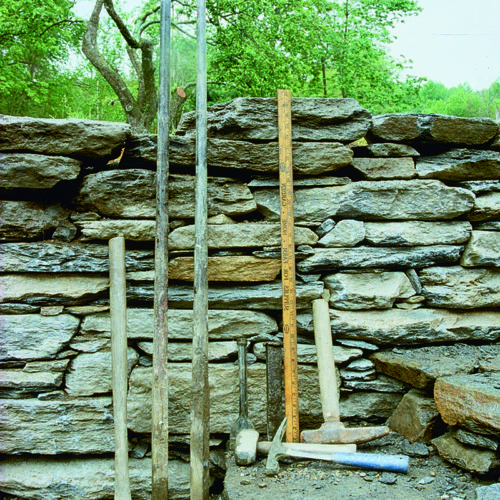
Now you can start digging. The easiest approach is to cut and fill—that is, dig into the slope where the wall will go and spread the earth below you to create a level terrace. When you cut and fill, the wall is backed by undisturbed soil, which is more stable than fill. For design reasons, however, you might choose to build a freestanding wall and fill behind it with soil from another site. Or you might do a partial cut and fill, which is somewhere between the two.
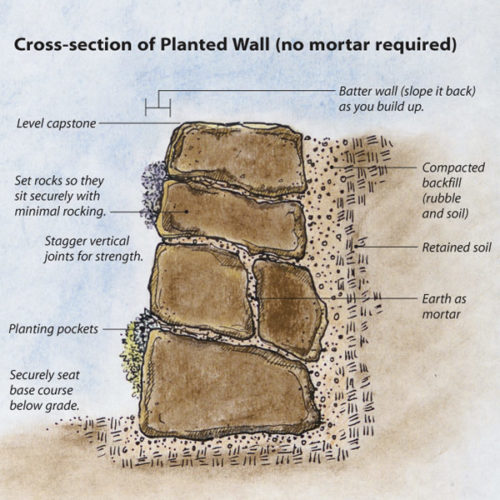
ديوارون ڪورس ۾ ٺهيل آهن. The base course is structurally the most important, while the final course, the capstone, is the most challenging. For stability, walls should be at least 20 inches wide at the base. They can taper slightly toward the top, but you’ll want a wall that is at least two rocks wide in most places. This can be accomplished by mixing stones of different sizes or by backfilling with a combination of two-thirds rubble to one-third soil.
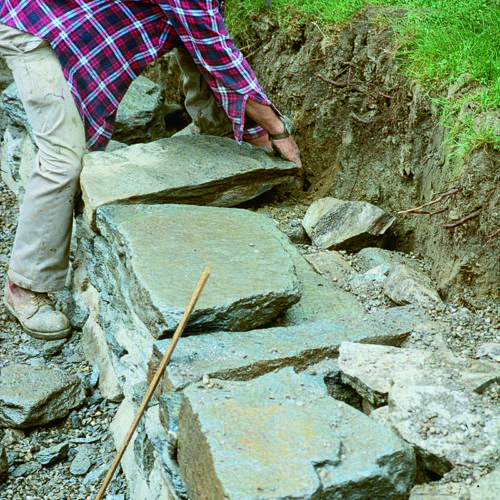
بنيادي ڪورس لاء هڪ خندق کڙو
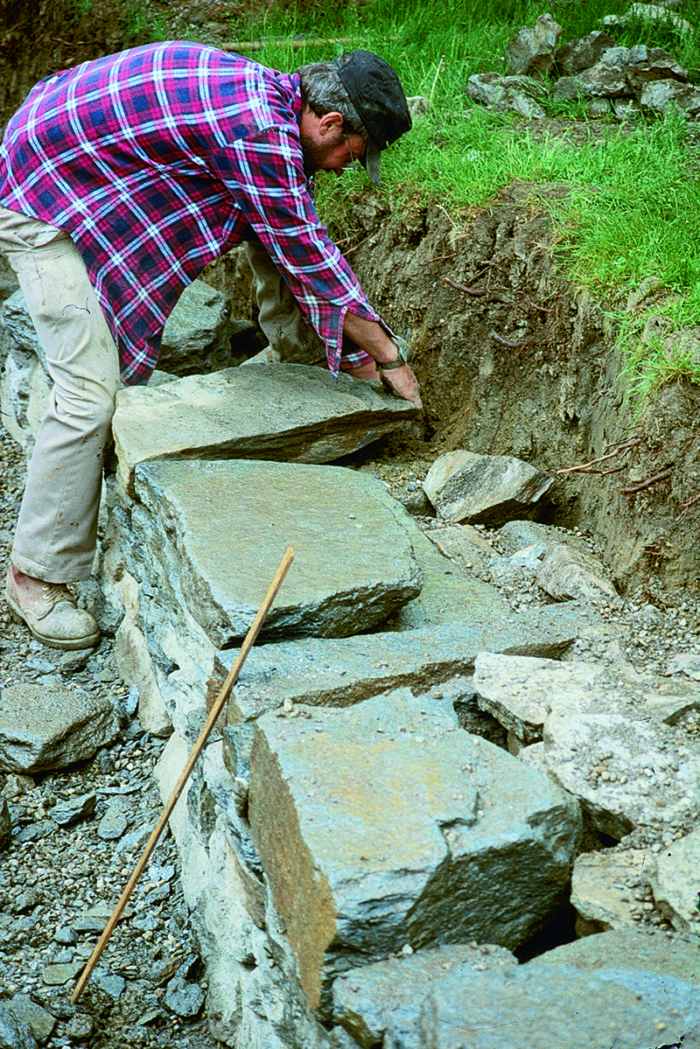
Start by digging a trench about 4 inches deep and at least 2 feet wide. A straightedged spade will give you a nice, even edge. The first course must be very solid and tightly fit because the weight of the wall will rest on it. Take the time to find rocks that lock into place, without leaving gaps. Randomly lay your largest rocks along the front edge of the trench. Set the first stone, shifting it around until it sits securely without being rocked easily, and then fill with the remaining stones. If you are using rectangular stones, you want the height of adjacent stones to be the same, or of a difference that can be made up with a smaller stone. If the rocks are irregular, then the stones will fit together leaving a triangular gap for the next course to fit into. I find irregular rocks easier to work with than flat ones; with flat rocks you have to be more precise. Find a stone that fits well and then continue for a few more feet. A rule of thumb, passed down from my wall-building teacher’s mentor, is to try a stone seven different ways. If it doesn’t fit by the seventh try, use another stone.
ان کان پوء، پٿر جي پويان مٽي کي ڦوڪيو ۽ زمين کي خالي جاء تي ڇڪيو between, behind, and beneath the stones with top of the sledgehammer. This is an important step because the dirt becomes the mortar for the wall. I also recommend adding rubble (those stones you won’t use on the face of your wall) behind the face course to give greater strength to the wall. Pound the rubble and soil mix until you are satisfied that it is solid. Continue the first course until you reach the end of the wall. When you are done, test
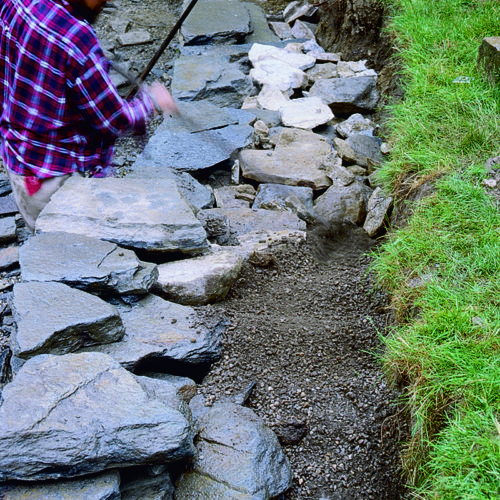
ٻئين ڪورس کي شروع ڪرڻ لاء، ھڪڙو پٿر چونڊيو جيڪو ھيٺئين ڪورس جي پھرين گڏيل کي پل ڪندو. Avoid having joints run up the face of the wall, and angle (batter) the courses backward—approximately 1 inch per vertical foot. This creates a stable wall. For added strength, intermittently place single stones that run the full depth of the wall. This will only work with rectangular rocks. For irregular rocks, place a large rock behind a face rock every 3 feet or so. As you set a course, you will come to situations, probably quite a few of them, where the rock placement is perfect on all sides but one. These are the planting opportunities that give life to a stone wall.
Continue building in this manner until you are one course away from the finished height. Fitting stones will get easier as you go, and you’ll likely discover that there’s a certain magic moment when you’re building a wall: you hear a thump that signals you’ve placed a rock perfec
پنھنجي ڀت جي سيٽنگ جي اوچائي ٺاھيو
The ideal height for a dry-stacked retaining wall is 18 to 22 inches—so you can sit on it when your gardening chores are done. Even if
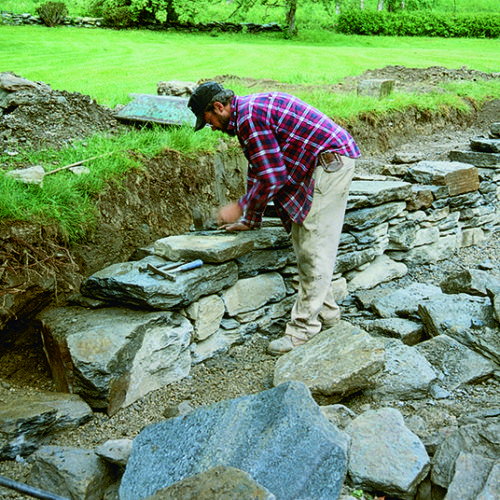
ڪيپسٽون لڳائڻ جي عمل ۾ ڪافي صبر آڻيو؛ اهو ان مهارت جو انتها آهي جيڪو توهان هن نقطي تائين ترقي ڪئي آهي. اهو اٽڪل 15 کان 18 انچ اونهو هجڻ گهرجي، هڪ کان ٽن پٿرن مان ٺهيل آهي. پٿر کي محفوظ ڪرڻ لاءِ مٽي ۽ سٺي جاءِ استعمال ڪريو، ۽ جيئن ڀت جي جوڑوں سان، ڪئپسٽون ۾ ڊگھي جوڑوں کان پاسو ڪريو. جيڪڏھن توھان ڀت تي ويھڻ چاھيو ٿا، صاف، لوڻ پٿر چونڊيو. يا، مٽي سان خال ڀريو ۽ کشن لاءِ خوشبودار جڙي پوکيو. هڪ پوکيل ڪيپسٽون هڪ لذيذ فنشنگ ٽچ آهي هڪ جاندار ڀت ڏانهن.
 آفريڪي
 الباني
 امهاري
 عربي
عربي آرمينيائي
 آذربائيجاني
 بسڪاني
 بيلاروسي
 بنگالي
  بوسنيائي
 بلغاريائي
 قيطلوني
 سيبوانو
 چين
چين چين (تائيوان)
 ڪارسيڪائي
 ڪروشيائي
 چيڪ ٻولي
 ڊينش ٻولي
 ڊچ ٻولي
 انگريزي
 ايسپرانتو
 ايستونائي
 فني
فني فرانسي
 فريسين
 گاليشين ٻولي
 جيارجي
 جرمني
جرمني يوناني
 گجراتي
 هيٽي ڪرولي
 هوسا ٻولي
 هوائين
 عبراني
 نه
نه مائو
مائو هنگري
هنگري آئس لينڊي
 igbo
igbo انڊونيشي
 آئرستاني
 اطالوي
 جاپاني
 جاواني
 ڪنادي
ڪنادي قازق
قازق خمير
خمير روانڊان
 ڪورين
ڪورين ڪردي
ڪردي ڪرغيز
ڪرغيز ٽي بي
ٽي بي لاطيني
 لاتوين ٻولي
 ليٿونيائي
 لڪسمبرگي
 مقدوني
 ملگاشي
 مالائي
 مالايالم
 مالٽي
مالٽي مائوري
 مراٺي
مراٺي منگولي
 میانمار
 نيپالي
 نارويجي
 نارويجي
 آڪسيٽن
 پشتو
پشتو فارسي
فارسي پالش
پالش پرتگالي
  پنجابي
 رومانوي
 روسي
روسي سامونڊي
 اسڪاٽش گيلڪ
 سربيائي
 انگريزي
 شونا
شونا سنڌي
سنڌي سنڌي
سنڌي سلوويڪي
 سلوويني
 صومالي
 اندلسي
 سنڊاني
 سواهلي
 سويڊني
 تگلگ ٻولي
 تاجڪ
تاجڪ تاملي
تاملي تاتاري
 تيلوگو ٻولي
 ٿائي ٻولي
 ترڪي
ترڪي ترڪماني
 يوڪريني
 اردو
اردو اويغور
 ازبڪ
ازبڪ ويٽنامي
 ويلش
ويلش