

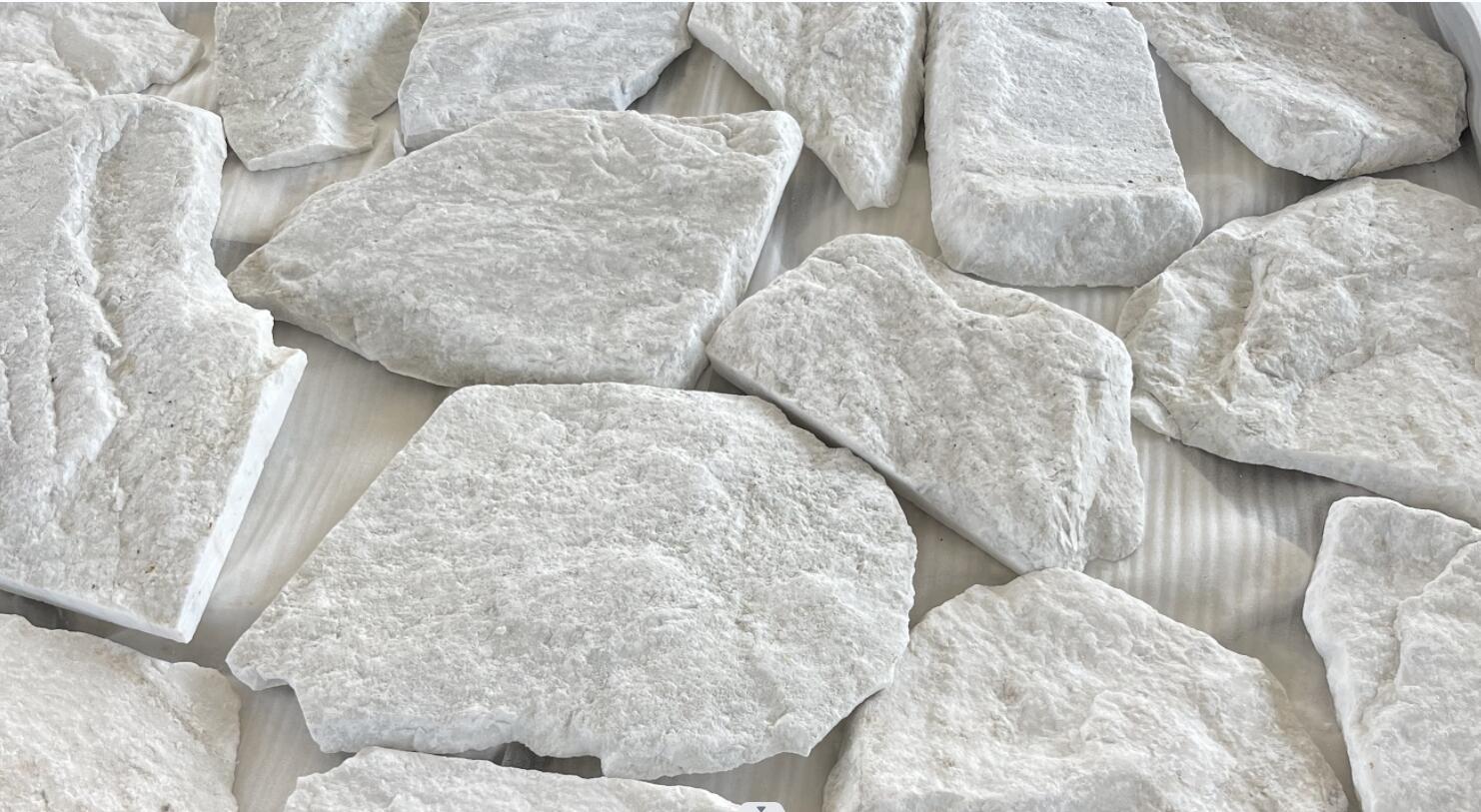
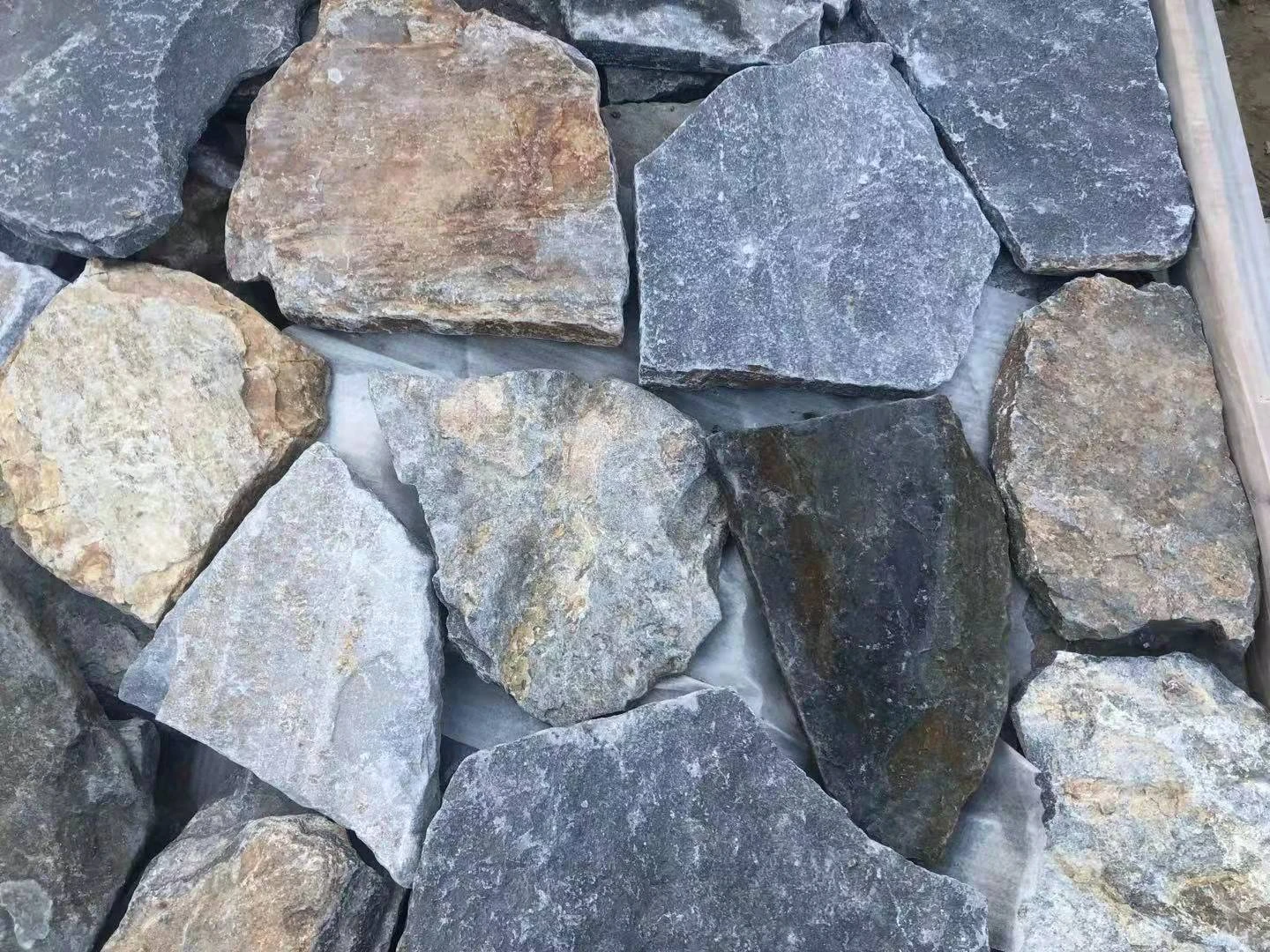
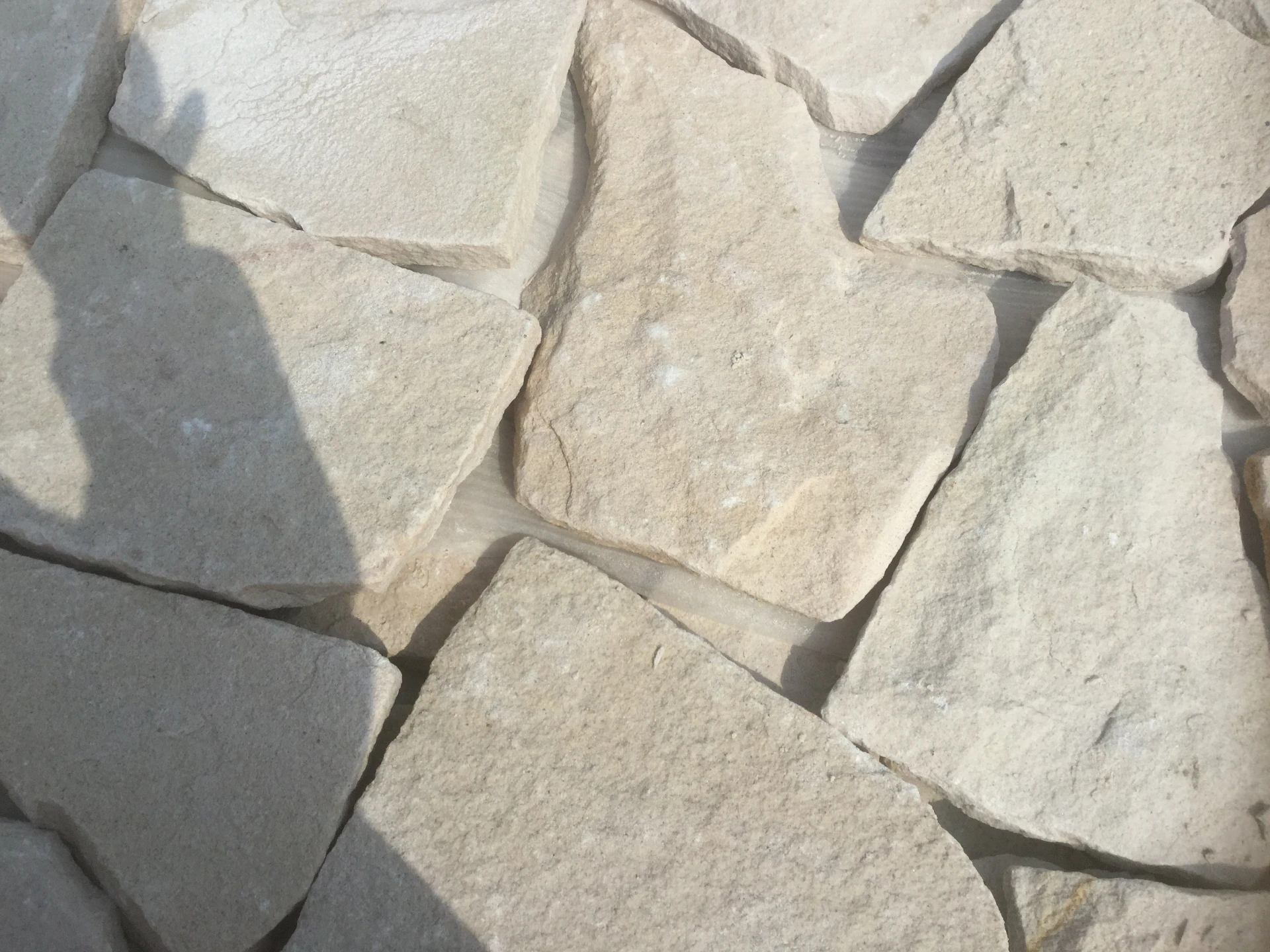
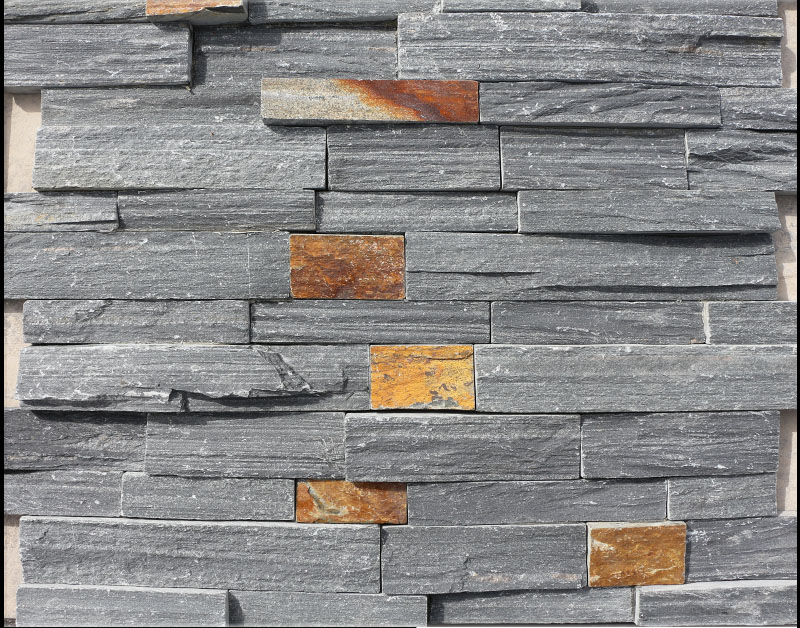
Ryðgaðar flísar
Langar þig að byggja þinn eigin steinstoðvegg en er ekki viss um hvernig á að byrja? Ef þú ert með ójafn garð, steinstoðveggur getur hjálpað til við að koma í veg fyrir veðrun og gefur góðan stað til að gróðursetja. Til að læra hvernig á að setja saman þitt eigið, frá upphafi til enda, lestu áfram.
To figure out how much stone you’ll need, multiply your wall’s height times the depth times the length. If your wall is 2 feet high, 1-1/2 feet wide, and 20 feet long, you’ll need roughly 60 cubic feet of stone. Most stoneyards will deliver the stones for a slight charge; have them placed as close to the site of your retaining wall as possible.
Eins og fyrir tools, you’ll need a shovel for digging your trench and backfilling, a mattur for attacking the grade, and a small sledgehammer for tamping soil. For marking your site and leveling rocks, you’ll need a line level, a few tall stakes, string, some flour, and a 4- or 8-foot level.
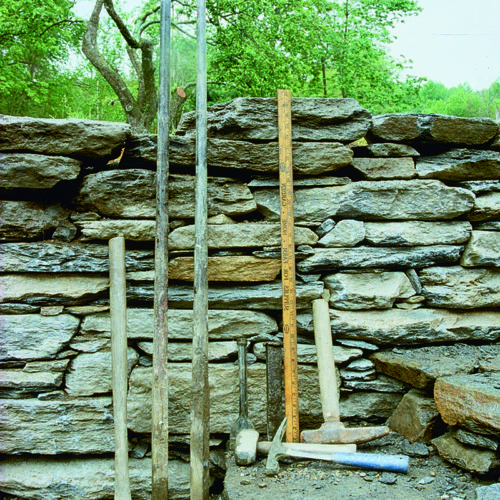
Now you can start digging. The easiest approach is to cut and fill—that is, dig into the slope where the wall will go and spread the earth below you to create a level terrace. When you cut and fill, the wall is backed by undisturbed soil, which is more stable than fill. For design reasons, however, you might choose to build a freestanding wall and fill behind it with soil from another site. Or you might do a partial cut and fill, which is somewhere between the two.
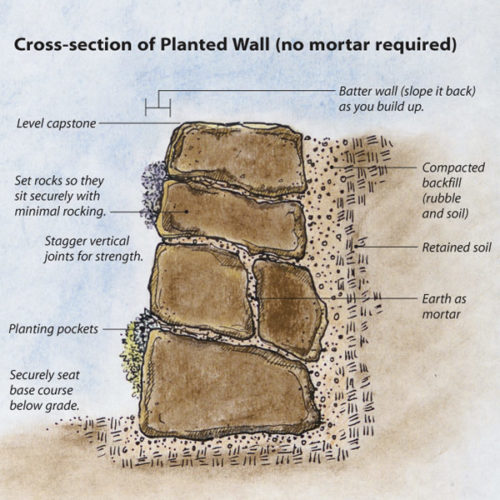
Veggir eru byggðir í brautum. The base course is structurally the most important, while the final course, the capstone, is the most challenging. For stability, walls should be at least 20 inches wide at the base. They can taper slightly toward the top, but you’ll want a wall that is at least two rocks wide in most places. This can be accomplished by mixing stones of different sizes or by backfilling with a combination of two-thirds rubble to one-third soil.
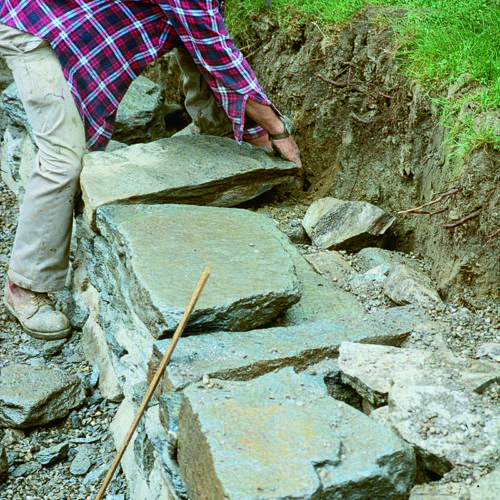
Grafa skurð fyrir undirlag
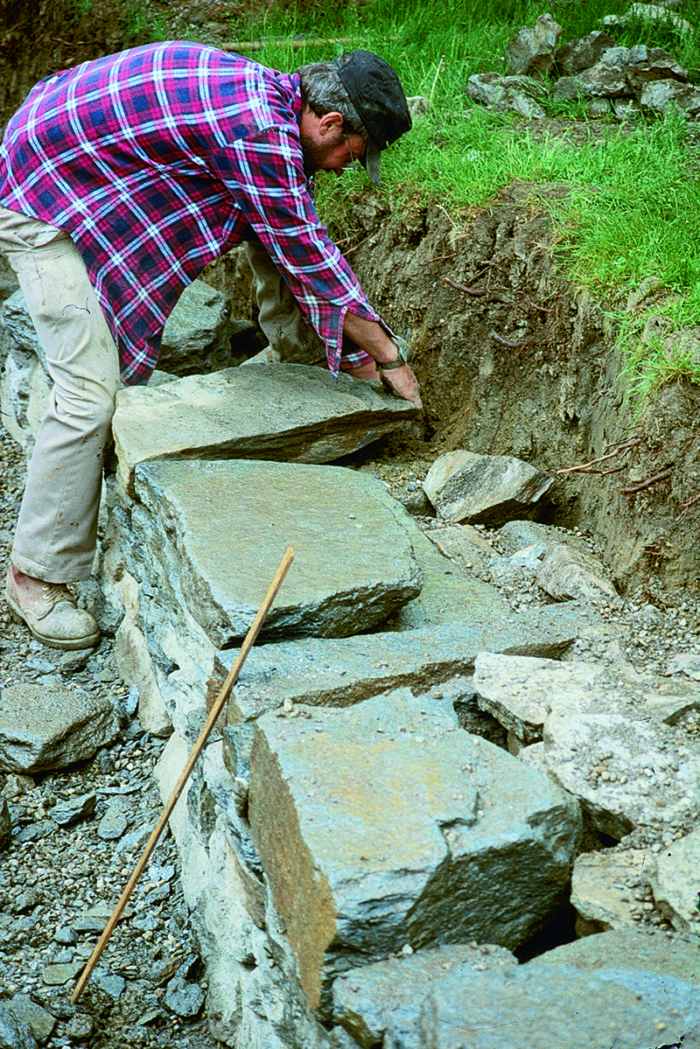
Start by digging a trench about 4 inches deep and at least 2 feet wide. A straightedged spade will give you a nice, even edge. The first course must be very solid and tightly fit because the weight of the wall will rest on it. Take the time to find rocks that lock into place, without leaving gaps. Randomly lay your largest rocks along the front edge of the trench. Set the first stone, shifting it around until it sits securely without being rocked easily, and then fill with the remaining stones. If you are using rectangular stones, you want the height of adjacent stones to be the same, or of a difference that can be made up with a smaller stone. If the rocks are irregular, then the stones will fit together leaving a triangular gap for the next course to fit into. I find irregular rocks easier to work with than flat ones; with flat rocks you have to be more precise. Find a stone that fits well and then continue for a few more feet. A rule of thumb, passed down from my wall-building teacher’s mentor, is to try a stone seven different ways. If it doesn’t fit by the seventh try, use another stone.
Næst skaltu moka óhreinindum á bak við steinana og troða jörðinni inn í rýmin between, behind, and beneath the stones with top of the sledgehammer. This is an important step because the dirt becomes the mortar for the wall. I also recommend adding rubble (those stones you won’t use on the face of your wall) behind the face course to give greater strength to the wall. Pound the rubble and soil mix until you are satisfied that it is solid. Continue the first course until you reach the end of the wall. When you are done, test
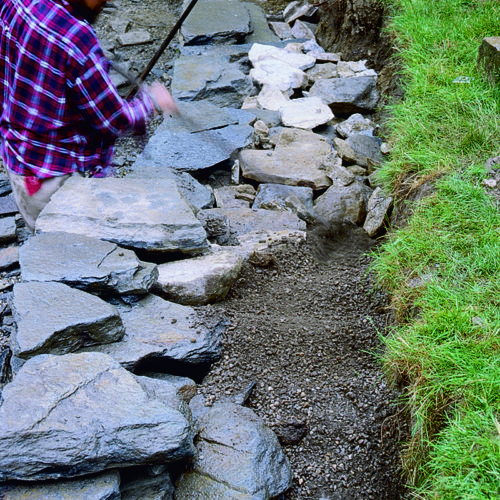
Til að hefja seinni brautina skaltu velja stein sem mun brúa fyrstu samskeyti neðsta brautarinnar. Avoid having joints run up the face of the wall, and angle (batter) the courses backward—approximately 1 inch per vertical foot. This creates a stable wall. For added strength, intermittently place single stones that run the full depth of the wall. This will only work with rectangular rocks. For irregular rocks, place a large rock behind a face rock every 3 feet or so. As you set a course, you will come to situations, probably quite a few of them, where the rock placement is perfect on all sides but one. These are the planting opportunities that give life to a stone wall.
Continue building in this manner until you are one course away from the finished height. Fitting stones will get easier as you go, and you’ll likely discover that there’s a certain magic moment when you’re building a wall: you hear a thump that signals you’ve placed a rock perfec
Gerðu vegginn þinn hæð
The ideal height for a dry-stacked retaining wall is 18 to 22 inches—so you can sit on it when your gardening chores are done. Even if
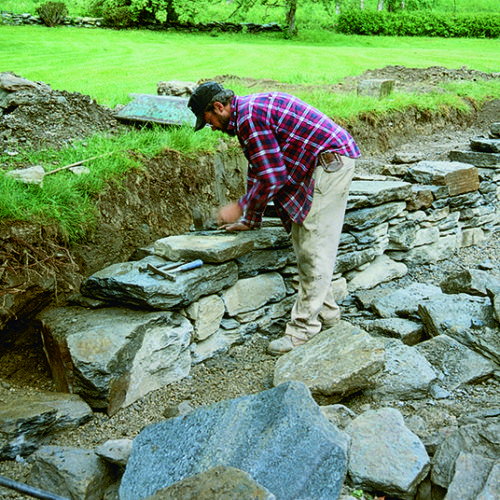
Komdu með mikla þolinmæði í ferlið við að leggja toppsteininn; það er hápunktur kunnáttunnar sem þú hefur þróað til þessa. Það ætti að vera um það bil 15 til 18 tommur djúpt, samanstendur af einum til þremur steinum. Notaðu jarðveg og góða staðsetningu til að festa steinana og rétt eins og með veggsamskeyti, forðastu langa samskeyti í þaksteininum. Ef þú vilt sitja á veggnum skaltu velja slétta, flata steina. Eða fylltu eyður með jarðvegi og plantaðu ilmandi jurtum fyrir púða. Gróðursettur dekksteinn er yndislegur frágangur á lifandi vegg.
 Afríku
 albanska
 amharíska
 arabíska
 Armenska
 Aserbaídsjan
 baskneska
 hvítrússneska
 bengalska
  bosníska
 búlgarska
 katalónska
 Cebuano
 Kína
Kína Kína (Taívan)
 korsíkanskt
 króatíska
 tékkneska
 danska
 hollenska
 Enska
Enska esperantó
 eistneska, eisti, eistneskur
 finnska
 franska
 frísneska
 galisíska
 georgískt
 þýska, Þjóðverji, þýskur
 grísku
 Gújaratí
 Haítískt kreóla
 hausa
hausa hawaiískur
 hebreska
 Neibb
Neibb Miaó
Miaó ungverska, Ungverji, ungverskt
 íslenskur
 igbó
igbó indónesíska
 írska
írska ítalska
 japönsku
 javanska
 Kannada
 kasakska
 Khmer
Khmer Rúanda
 kóreska
 Kúrda
Kúrda Kirgisi
 TB
TB latína
 lettneska
 litháískur
 Lúxemborg
 makedónska
 Malgashi
 malaíska
 Malajalam
 maltneska
 Maori
Maori Marathi
 mongólska
 Mjanmar
 nepalska
 norska
 norska
 oksítanska
 Pastó
Pastó persneska
 pólsku
 portúgalska
  Púndjabí
 rúmenska
 Rússneskt
 Samósk
 skosk gelíska
 serbneska
 Enska
Enska Shona
Shona Sindhi
 Sinhala
 Slóvakíu
 slóvenska
 sómalska
 spænska, spænskt
 Sundaneskir
 svahílí
 sænsku
 Tagalog
 Tadsjikska
 tamílska
 Tatar
Tatar telúgú
 Tælensk
 tyrkneska
 Túrkmena
 úkraínska
 Úrdú
Úrdú Uighur
 úsbekskur
 Víetnamska
 velska