

Kīleʻa ʻeleʻele
Makemake ʻoe e kūkulu i kou pā pōhaku ponoʻī, akā ʻaʻole maopopo pehea e hoʻomaka ai? Inā loaʻa iā ʻoe kahi ʻano like ʻole pā hale, hiki i ka pā pōhaku paʻa ke kōkua i ka pale ʻana i ka ʻinoʻino a hāʻawi i kahi maikaʻi e kanu ai. No ke aʻo ʻana pehea e hoʻohui ai iā ʻoe iho, mai ka hoʻomaka a hiki i ka pau, e heluhelu ma.
To figure out how much stone you’ll need, multiply your wall’s height times the depth times the length. If your wall is 2 feet high, 1-1/2 feet wide, and 20 feet long, you’ll need roughly 60 cubic feet of stone. Most stoneyards will deliver the stones for a slight charge; have them placed as close to the site of your retaining wall as possible.
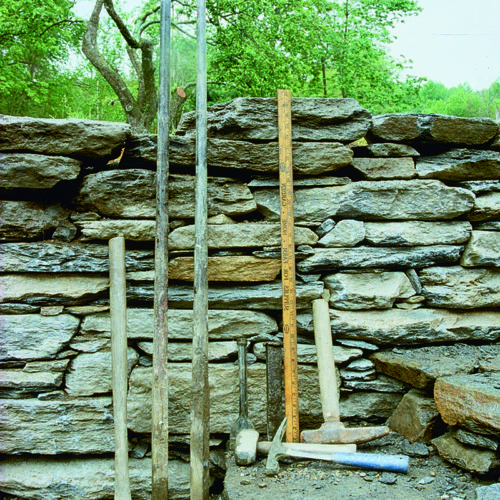
No ka mea tools, you’ll need a shovel for digging your trench and backfilling, a ʻokiʻoki for attacking the grade, and a small sledgehammer for tamping soil. For marking your site and leveling rocks, you’ll need a line level, a few tall stakes, string, some flour, and a 4- or 8-foot level.
Now you can start digging. The easiest approach is to cut and fill—that is, dig into the slope where the wall will go and spread the earth below you to create a level terrace. When you cut and fill, the wall is backed by undisturbed soil, which is more stable than fill. For design reasons, however, you might choose to build a freestanding wall and fill behind it with soil from another site. Or you might do a partial cut and fill, which is somewhere between the two.
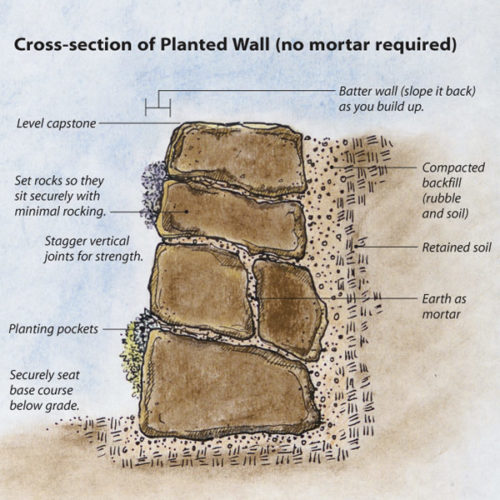
Kūkulu ʻia nā pā ma nā papa. The base course is structurally the most important, while the final course, the capstone, is the most challenging. For stability, walls should be at least 20 inches wide at the base. They can taper slightly toward the top, but you’ll want a wall that is at least two rocks wide in most places. This can be accomplished by mixing stones of different sizes or by backfilling with a combination of two-thirds rubble to one-third soil.
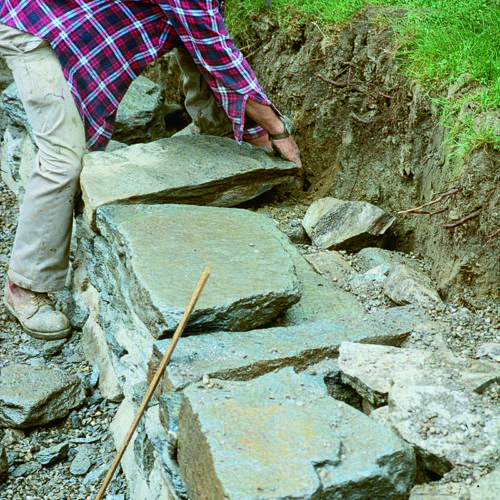
E eli i auwaha no ka papa kumu
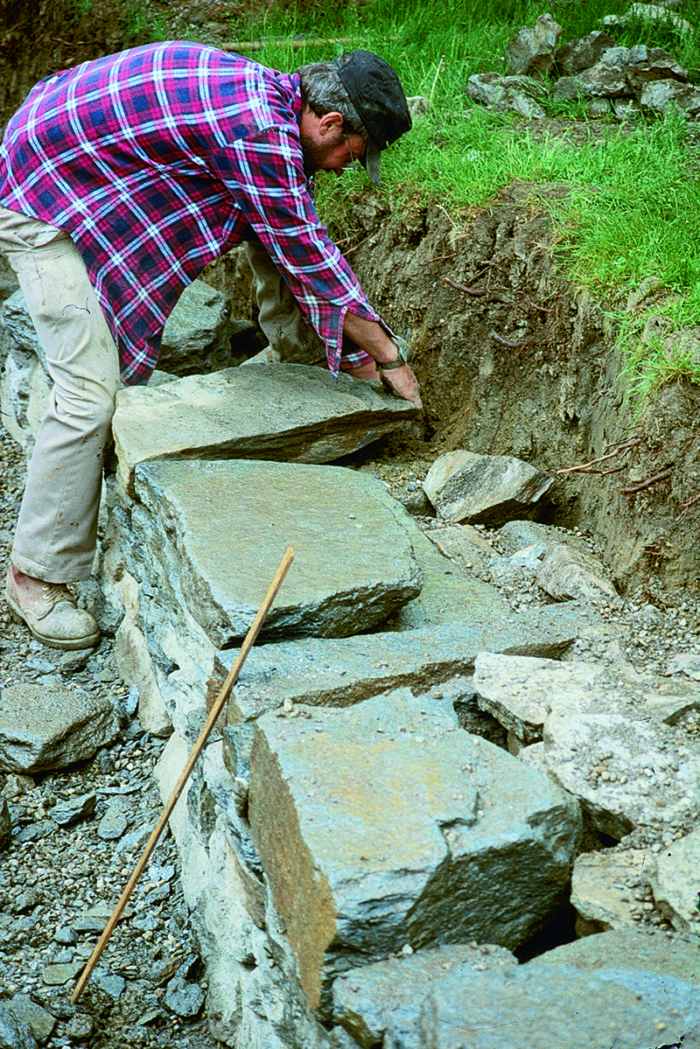
Start by digging a trench about 4 inches deep and at least 2 feet wide. A straightedged spade will give you a nice, even edge. The first course must be very solid and tightly fit because the weight of the wall will rest on it. Take the time to find rocks that lock into place, without leaving gaps. Randomly lay your largest rocks along the front edge of the trench. Set the first stone, shifting it around until it sits securely without being rocked easily, and then fill with the remaining stones. If you are using rectangular stones, you want the height of adjacent stones to be the same, or of a difference that can be made up with a smaller stone. If the rocks are irregular, then the stones will fit together leaving a triangular gap for the next course to fit into. I find irregular rocks easier to work with than flat ones; with flat rocks you have to be more precise. Find a stone that fits well and then continue for a few more feet. A rule of thumb, passed down from my wall-building teacher’s mentor, is to try a stone seven different ways. If it doesn’t fit by the seventh try, use another stone.
A laila, e ʻohi i ka lepo ma hope o nā pōhaku a kau i ka honua i loko o nā ākea between, behind, and beneath the stones with top of the sledgehammer. This is an important step because the dirt becomes the mortar for the wall. I also recommend adding rubble (those stones you won’t use on the face of your wall) behind the face course to give greater strength to the wall. Pound the rubble and soil mix until you are satisfied that it is solid. Continue the first course until you reach the end of the wall. When you are done, test
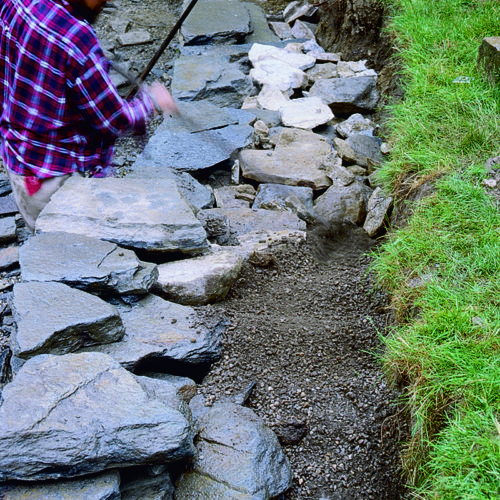
No ka hoʻomaka ʻana i ka papa ʻelua, e koho i kahi pōhaku e hoʻopili i ka hui mua o ka papa lalo. Avoid having joints run up the face of the wall, and angle (batter) the courses backward—approximately 1 inch per vertical foot. This creates a stable wall. For added strength, intermittently place single stones that run the full depth of the wall. This will only work with rectangular rocks. For irregular rocks, place a large rock behind a face rock every 3 feet or so. As you set a course, you will come to situations, probably quite a few of them, where the rock placement is perfect on all sides but one. These are the planting opportunities that give life to a stone wall.
Continue building in this manner until you are one course away from the finished height. Fitting stones will get easier as you go, and you’ll likely discover that there’s a certain magic moment when you’re building a wall: you hear a thump that signals you’ve placed a rock perfec
E hoʻokiʻekiʻe i kou pā
The ideal height for a dry-stacked retaining wall is 18 to 22 inches—so you can sit on it when your gardening chores are done. Even if
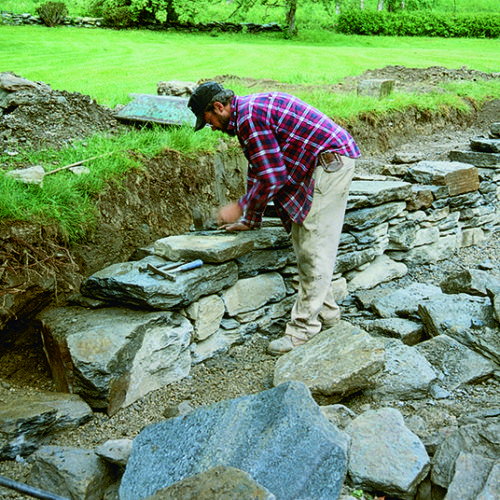
E lawe mai i ka hoʻomanawanui i ke kaʻina hana o ke kau ʻana i ka pōhaku kiʻekiʻe; ʻo ia ka hopena o ke akamai āu i hoʻomohala ai a hiki i kēia manawa. Aia ma kahi o 15 a 18 iniha ka hohonu, mai hoʻokahi a ʻekolu mau pōhaku. E hoʻohana i ka lepo a me ka hoʻokomo maikaʻi ʻana e hoʻopaʻa i nā pōhaku, a e like me nā hui pā, e pale i nā ami lōʻihi ma ka capstone. Inā makemake ʻoe e noho ma luna o ka pā, e koho i nā pōhaku paheʻe. A i ʻole, e hoʻopiha i nā āpau me ka lepo a kanu i nā mea kanu ʻala no nā cushions. ʻO kahi capstone i kanu ʻia he mea hoʻopau maikaʻi i ka pā ola.






 ʻApelika
 Alapania
 Amahapika
 Apapika
 Ameniana
 Azerbaijani
 Pōkē
Pōkē ʻŌlelo Belarusa
 Penekali
  Ponia
Ponia Pukalia
 ʻŌlelo Katalonia
 Cebuano
 Kina
Kina Kina (Taiwan)
 ʻŌlelo Kokia
 Koalia
 Keka
Keka Kenemaka
 Hōlani
 Pelekania
 ʻŌlelo Esperanto
 Ekekonia
 Pinilana
 Palani
 Frisian
 Kalikia
 Keokia
 Alemania
 Helene
 Kuhalaki
 ʻŌlelo Haiki
 Hauka
Hauka ʻŌlelo Hawaiʻi
 Hepela
 ʻAʻole
 Miao
Miao Hunakalia
 ʻĀinahau
 igbo
igbo ʻInikonia
 Ipelana
 Ikalia
 Kepanī
 Kawanī
 Kanākā
 ʻŌlelo Kazaka
 Khmer
Khmer Rwandan
 Kolea
Kolea ʻŌlelo Kurdish
 ʻŌlelo Kyrgyz
 TB
TB ʻŌlelo Lākni
 Lakiwiana
 ʻŌlelo Lituania
 ʻŌlelo Lukemapuka
 Makekoni
 Malgashi
 Mālei
Mālei Mālealama
 Malkī
Malkī ʻŌlelo Māori
 Malapi
 ʻŌlelo Monokolia
 Maianamara
 Nepali
 Nolewai
 Nolewai
 ʻOkitana
 ʻŌlelo Pashto
 Pelekia
 Pōlani
 Pukikī
  ʻŌlelo Punajabi
 Lomānia
 Lukia
Lukia Sāmoa
Sāmoa Gaelika Sekotia
 ʻŌlelo Serbia
 Pelekania
 Shona
Shona Kiniki
 Sinhala
 Kolowakia
 Kolewenia
 ʻŌlelo Somalia
 Kepania
 Sundana
 Kawahili
 Kuekene
 Kakalo
 Tajika
 Kamili
 Tatar
Tatar Keluku
 Kailani
 Tureke
 ʻŌlelo Kuleke
 Ukrainian
 Urdu
Urdu Uighur
 ʻUzbek
 Vietnamese
 Welsh
Welsh